The 15-Minute Pantry Matrix: Build Weeknight Dinners Without Repeating Yourself
A quick dinner plan often fails for a surprising reason: it depends on remembering a complete recipe at the exact moment attention and energy are running low. Even a short recipe can feel demanding when one ingredient is missing, the vegetables need more preparation than expected, or everyone is tired of the same familiar bowl. The answer is not a larger collection of recipes. It is a small system for assembling dinner from useful parts.
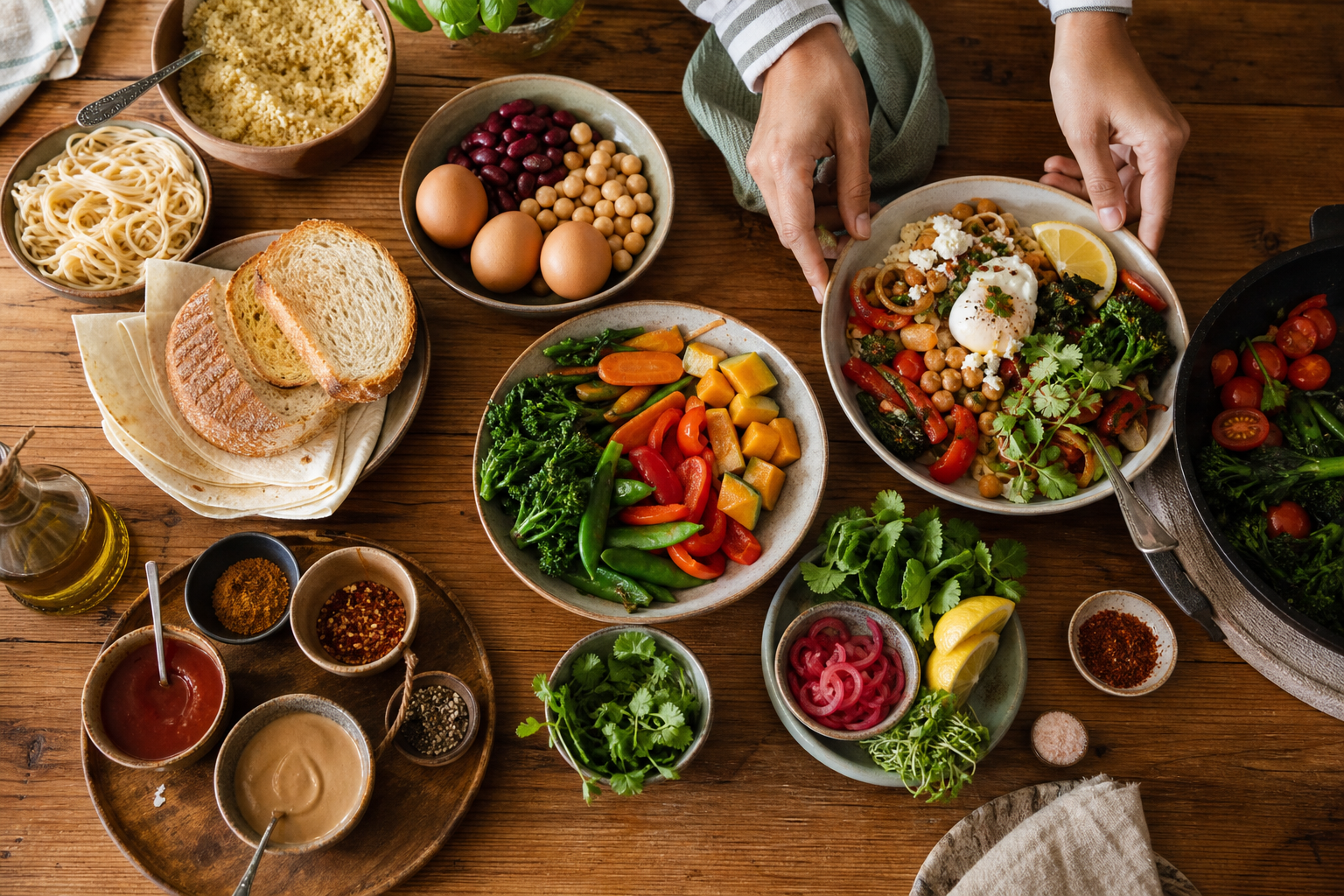
The 15-minute pantry matrix is a way to combine a base, a satisfying anchor, a vegetable, a flavor builder, and a finishing contrast. Each part has several options that cook quickly or can be kept ready. By changing one or two coordinates, you can produce a meal with a different shape and personality without learning an entirely new procedure.
The fifteen-minute promise assumes the ingredients are already safe to use and chosen for speed: canned beans, quick-cooking grains, eggs, refrigerated leftovers, frozen vegetables, thin noodles, or other components with short preparation times. It is a design constraint, not a race. If an ingredient needs longer cooking, prepare it earlier or choose another square in the matrix.
Understand the five-part matrix
A complete-feeling quick meal needs more than calories and sauce. It needs structure. The base gives the dish its physical form. The anchor makes it substantial. The vegetable adds freshness, color, and variation. The flavor builder creates a recognizable direction. The finish supplies contrast at the last moment.
- Base: quick noodles, couscous, toast, tortillas, precooked rice, polenta, or a tender green.
- Anchor: beans, lentils, eggs, tofu, canned fish, shredded cooked meat, cheese, or a combination.
- Vegetable: frozen peas, spinach, tomatoes, cabbage, peppers, mushrooms, corn, grated carrot, or leftover roasted vegetables.
- Flavor builder: a concentrated paste, spice mixture, aromatic oil, savory condiment, or quick sauce.
- Finish: herbs, toasted seeds, crisp crumbs, pickled vegetables, citrus, yogurt, or a drizzle of oil.
The categories are functional rather than strict. Toast can be a base in one meal and a crisp finish in another. Cheese can anchor a sandwich or finish a bowl. What matters is the job the ingredient performs in that particular dinner.
Build a pantry for movement, not display
A useful pantry is not measured by how many ingredients it contains. It is measured by how easily ingredients can become meals together. Start with a modest group of components that cross-connect. A jar used in only one elaborate dish creates pressure. A condiment that can season noodles, beans, eggs, and vegetables creates options.
Choose two or three items for each matrix role. Keep at least one shelf-stable or frozen choice in the anchor and vegetable columns, because those are the parts most likely to be missing late in the week. The base column should include options with different textures: perhaps noodles for slurping, toast for crunch, and couscous for a soft grain bowl.
Group fast components where you can see them. Store flavor builders together rather than scattering them among unrelated shelves. Keep the oldest suitable item at the front. Visibility reduces the mental work of deciding and helps the matrix respond to what needs using first.
Create a short list of flavor directions
The matrix becomes repetitive when every combination receives the same seasoning. Build several flavor directions from ingredients you genuinely enjoy. Each direction should contain saltiness, aroma, acidity, and optional heat or sweetness.
For example, a bright herb direction could combine olive oil, lemon, black pepper, and fresh or dried herbs. A warm tomato direction could use tomato paste, garlic, smoked spice, and a splash of vinegar. A savory sesame direction might pair sesame paste or oil with a salty condiment, vinegar, and chili. A mild creamy direction could begin with yogurt or soft cheese, then add herbs, pepper, and citrus.
These are not rigid sauces. They are balancing guides. Taste before adding more salt, especially when canned, cured, or prepared ingredients already contribute it. Add acidity in small amounts. If a sauce is too intense, loosen it with a little water from the cooking pot rather than covering the dish with more fat.
Use a single-pan sequence
Speed comes from order, not frantic motion. Decide which component takes longest and start it first. While water heats or bread toasts, prepare the flavor builder. Add vegetables at the moment that suits their texture. Fold in the anchor once the pan can heat it through without drying it out. Finish away from high heat when using tender herbs, yogurt, citrus, or crisp toppings.
A dependable sequence is:
- Start the base or place a pan over appropriate heat.
- Mix or measure the flavor builder while the equipment warms.
- Cook firm vegetables first; add tender or precooked vegetables later.
- Add the anchor and heat it safely and evenly.
- Combine with the base, adjust moisture, and taste.
- Remove from heat and add the contrasting finish.
This sequence keeps the cook focused on one timeline. If two parts demand attention at once, simplify. Use toast instead of a second pot, frozen vegetables instead of several raw ones, or a room-temperature sauce instead of another pan.
Four matrix shapes for different evenings
The same components can become different meals depending on their shape. Choosing the shape first narrows the decision.
The coated bowl
Use noodles, couscous, rice, or another spoonable base. Warm the anchor and vegetables together, then use a flavor builder with enough moisture to coat the base. Finish with something crisp or bright. A coated bowl works especially well for ingredients that are already cut small, such as peas, beans, shredded vegetables, or leftover roasted pieces.
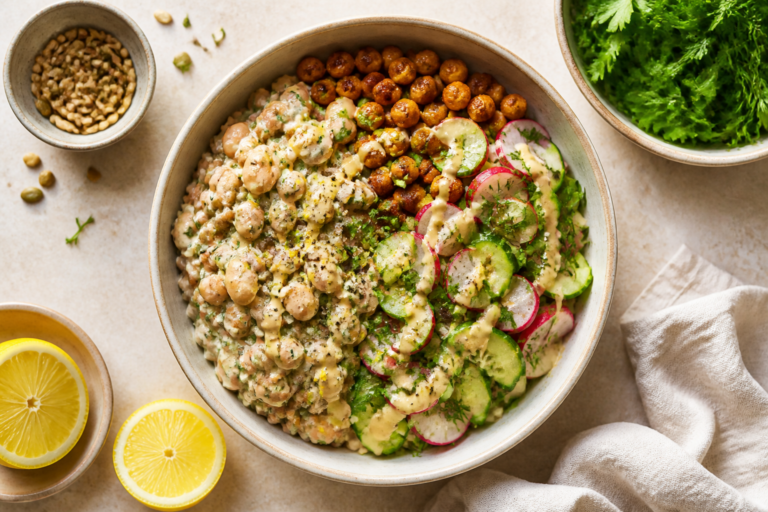
Example: couscous, chickpeas, frozen peas, lemon-herb oil, and toasted seeds. A different direction might use quick noodles, an egg, shredded cabbage, savory sesame sauce, and pickled vegetables. The structure stays constant while texture and flavor change.
The loaded toast or flatbread
Toast creates immediate contrast and removes the need to cook a separate grain. Spread or spoon on an anchor that will keep loose vegetables in place. Add a warm vegetable, then a sharp or crisp finish. Manage moisture so the base remains sturdy: drain canned ingredients, let juicy tomatoes sit briefly, and place creamy elements between the bread and wetter toppings.
Try mashed white beans with wilted greens, peppery tomato oil, and crisp crumbs. Another version could combine soft eggs, sautéed mushrooms, herbs, and a small acidic finish. The method is more important than the exact topping.
The folded meal
Tortillas and similar wraps turn small amounts of several ingredients into a coherent dinner. Warm the anchor and vegetable together, use a thick flavor builder rather than a runny sauce, and finish with something fresh. Avoid overfilling. A smaller, secure fold is easier to eat and lets each bite contain the full matrix.
Beans, corn, cabbage, smoky tomato seasoning, and yogurt create one direction. Lentils, grated carrot, warm spices, herbs, and a tangy sauce create another. Leftovers can enter this shape when they are chopped evenly and reheated appropriately.
The fast skillet
The skillet shape works when the base is also part of the mixture: precooked rice, cubed bread, small pasta, or thinly sliced potatoes that are already cooked. Begin with the vegetable, add the anchor, then introduce the base and flavor builder. Let some surfaces remain in contact with the pan long enough to gain texture instead of stirring constantly.
Finish with acidity and a cool or crunchy element. A skillet of rice, egg, peas, and aromatic seasoning feels different from a skillet of beans, tomatoes, bread cubes, and herbs even though both follow the same sequence.
Prevent repetition with contrast
Changing the main ingredient is not the only way to create variety. Texture, temperature, shape, and finishing aroma can make familiar pantry items feel new. If last night’s meal was soft and creamy, choose a crisp base or crunchy finish tonight. If it was warm and deeply spiced, use a bright herb direction with a cool element.
Think in pairs:
- Soft beans with crisp cabbage.
- Warm noodles with cool cucumber.
- Creamy sauce with toasted seeds.
- Earthy lentils with sharp pickles.
- Rich eggs with bright tomato.
- Tender vegetables with crisp crumbs.
A finish should be noticeable, not merely decorative. Add it at the table or just before serving so it keeps its texture and aroma. This small decision often creates more perceived variety than adding another major ingredient.
Use leftovers as prepared components
Leftovers become easier to use when they are described by function. A container of roasted vegetables belongs in the vegetable column. Cooked chicken belongs in the anchor column. A spoonful of herb sauce is a flavor builder. Naming the role makes the next combination easier to see.
Store components promptly and clearly, and use your normal food-safety judgment about refrigeration, reheating, and freshness. Do not let a fifteen-minute goal pressure you into using an ingredient you doubt. When reheating, bring the component to an appropriate safe condition and avoid repeatedly warming the same batch.
Plan one deliberate transformation. Roasted vegetables from an earlier meal can move into a tortilla with beans and a fresh finish. Cooked rice can become a skillet with egg and frozen peas. A remaining sauce can coat noodles with greens. The second meal should feel designed, not like the first plate rearranged.
Build a rescue row for the emptiest nights
Every matrix needs combinations that require almost no chopping and no special mood. Create two rescue meals from ingredients you usually keep. The first might be noodles, frozen vegetables, an egg, a savory sauce, and seeds. The second might be toast, canned beans, tomatoes, a herb mixture, and yogurt.
Write the combinations in plain language and keep the necessary components replenished. A rescue row is valuable because it removes negotiation at the moment of lowest energy. It also prevents the pantry from becoming a collection of good intentions with no default path.
Make the fifteen minutes feel calm
Set out the ingredients before cooking. Use one board, one knife, and the fewest vessels the meal requires. Put ingredients away as their role is complete. Keep a bowl for scraps near the work area. These small habits protect attention and make cleanup part of the flow rather than a second task waiting after dinner.
Do not attempt maximum variety inside a single plate. One base, one anchor, one or two vegetables, one flavor direction, and one finish are enough. Complexity slows decisions and can blur the character of the meal. Variety belongs across the week.
Keep a flexible formula card
Write the five matrix roles on a small card where you choose dinner: base, anchor, vegetable, flavor direction, and finish. Under each role, list only the ingredients currently available. Cross out an item when it is used and add a note when something needs replenishing. The card keeps the decision grounded in the real pantry rather than an ideal inventory.
Leave combinations open. Arrows or simple groupings can show that beans work with rice, toast, or pasta, while a bright herb finish suits several flavor directions. This is guidance, not a fixed menu. The card reduces searching but still leaves space to follow appetite, use a leftover, or change the meal shape.
Use a simple weekly rotation
At the beginning of the week, choose a few coordinates rather than complete recipes. Pick two bases, two anchors, several vegetables, and two contrasting flavor directions. Prepare only the bottleneck components: cook a longer grain, wash sturdy greens, mix a sauce, or toast a small container of seeds. Leave room for appetite and schedule to change.
As the week progresses, prioritize ingredients that are most perishable. Pair them with stable pantry components. Near the end, the frozen and shelf-stable rows keep the system working. The matrix therefore supports both flexibility and waste reduction without demanding a rigid meal calendar.
Turn pantry choices into dinner
When it is time to cook, ask five questions in order. What base fits tonight’s energy? Which anchor will make it satisfying? Which vegetable should be used now? What flavor direction sounds appealing? What finish will add contrast? Once those choices are made, select the simplest shape and follow the single-pan sequence.
The method is intentionally repeatable. Repetition of a reliable structure is not the same as repetition of a meal. A matrix lets you keep the decisions that reduce effort while changing the details that create pleasure. You learn how much moisture a bowl needs, how to protect the crunch in loaded toast, and when to add a delicate finish.
A fast weeknight dinner does not have to be improvised from nothing or reproduced from a fixed recipe. It can be assembled from a small set of prepared possibilities. With useful pantry components, a few flavor directions, and attention to contrast, fifteen minutes becomes enough time to build a meal that feels chosen rather than merely available.