The Texture Triangle: Build Plant-Based Meals With Contrast, Structure, and Staying Power
Many disappointing plant-based meals do not fail because they lack meat. They fail because every bite behaves the same way. A bowl of soft grains, soft beans, soft vegetables and a soft sauce may contain good ingredients yet feel unfinished. Another plate may be crisp and colorful but leave the diner searching for substance an hour later. Flavor matters, but texture tells the mouth whether a meal is varied, deliberate and complete.
The texture triangle for plant-based meals is a simple design tool. Build around a substantial anchor, add a lively contrast, and connect them with a flavorful bridge. Then check whether the plate has enough structure and nutritional range for the person eating it. The triangle is not a diet, a strict recipe or a claim that every nutrient can be judged by appearance. It is a way to turn ordinary beans, grains, vegetables, tofu, nuts, seeds, herbs and sauces into meals people genuinely want to repeat.
The three corners of the triangle
The first corner is the anchor: the component that gives the meal weight and shape. It might be lentils folded through brown rice, crisp-edged tofu, mashed beans on toast, a chickpea pancake, roasted squash filled with quinoa, or noodles coated with a sesame-rich sauce. An anchor need not be heavy, but it should make the meal feel more substantial than a collection of garnishes.
The second corner is contrast. Contrast wakes up the next bite. It can be crunchy, juicy, chewy, crisp, cool or sharply pickled. Toasted seeds over a creamy soup, cucumber beside spiced lentils, blistered green beans over soft noodles and a raw cabbage ribbon inside a warm taco all perform this role.
The third corner is the bridge: a sauce, dressing, broth, aromatic oil, relish or seasoned mash that makes separate components taste intentional together. The bridge supplies moisture and carries salt, acidity, spice and aroma. It should connect, not flood. A small amount of vivid sauce can do more than a large amount of bland one.
Why texture changes the experience of flavor
Taste is only one stream of information. Aroma rises as food is chewed. Temperature changes how quickly flavors appear. Sound contributes through crackle and crunch. Structure controls how long a bite lasts and how sauces spread across it. That is why the same tomato can feel completely different raw, slow-roasted, grated, charred or blended.
Contrast also creates pacing. A creamy mouthful makes a crisp one feel brighter; a chewy grain makes a juicy vegetable feel more refreshing. When everything is identical, the diner adapts quickly and attention fades. A meal does not need constant novelty, but it benefits from at least one purposeful change of rhythm.
This is especially useful in plant-based cooking because a small group of economical staples can produce many experiences. Lentils can remain intact, become a thick stew, form a patty or blend into a spread. The ingredient list barely changes; the structure does.
Choose the anchor by function, not imitation
A common starting question is, “What replaces the meat?” That can be useful for adapting a familiar dish, but it can also trap the cook in imitation. Ask instead what the center of the meal must do. Should it absorb a sauce, hold together in a sandwich, provide chew in a bowl, create a creamy base or offer browned edges?
Different anchors solve different problems:
- Beans, peas and lentils can provide creaminess, intact bite or a binding mash depending on cooking and handling.
- Tofu, tempeh and other soy foods can carry marinades, brown at the surface and take on structures from silky to firm.
- Whole grains and noodles create chew and a dependable base for vegetables, legumes and sauces.
- Nuts and seeds contribute richness and crunch in portions suited to the dish and eater.
- Dense vegetables such as squash, aubergine, mushrooms or cauliflower can provide a focal form, especially when paired with legumes or soy foods.
The anchor should match the cooking method. A delicate bean may disappear under vigorous stirring, while a firm lentil can remain distinct in a salad. Moist tofu will steam before it browns. Crowded vegetables release water and soften one another. Technique is the bridge between an ingredient’s potential and its final texture.
Use contrast with a specific job in mind
“Add something crunchy” is a start, but contrast works best when it corrects a weakness. If the anchor is rich and creamy, choose something fresh and acidic. If the bowl is dry and chewy, add a juicy element. If a stew is soft and warming, finish with toasted seeds, crisp leaves or a small raw relish.
Contrast can come from preparation rather than another purchase. Reserve some chickpeas to roast while the rest simmer into the base. Slice part of a cabbage finely for a raw topping and cook the remainder with the filling. Toast a portion of the grain until crisp in a pan. One ingredient can occupy two corners of the triangle.
Timing matters. Add delicate crunch at the table, not before a long journey in a sealed container. Keep wet dressing away from crisp components until serving. For packed meals, create separate zones or use a small inner container. Texture is partly a storage decision.
Build a bridge with four controls
A useful bridge balances four controls: richness, acidity, seasoning and aroma. Richness may come from blended beans, tahini, nuts, seeds, avocado or oil. Acidity may come from citrus, vinegar, tomato, fermented ingredients or pickled vegetables. Seasoning includes salt where appropriate as well as savoriness, bitterness and measured sweetness. Aroma comes from herbs, spices, toasted ingredients, alliums and zest.
Not every sauce needs all four in equal strength. A rich anchor may need a lean, acidic bridge. A dry grain bowl may benefit from more moisture. Highly seasoned components may require a plain yogurt-style plant-based accompaniment or a simple herb dressing rather than another powerful layer.
Taste the bridge with the anchor, not only from a spoon. A dressing that seems intense alone may be correct once spread across unsalted grains. A sauce that tastes balanced by itself may disappear when divided among many components.
Brown one thing and keep one thing fresh
This compact rule solves many weekday meals. Browning creates roasted aromas, deeper flavor and a firmer surface. Freshness supplies water, snap and lift. The two do not have to dominate the plate.
Brown mushrooms and keep parsley fresh. Crisp the edges of tofu and add raw cucumber. Roast cauliflower and finish with grated tomato. Toast a bean patty and serve it with shredded cabbage. If the meal already contains fried or heavily roasted components, freshness can be as simple as herbs and citrus.
Good browning depends on surface conditions. Drain wet ingredients, give them space, preheat the cooking surface appropriately and move them less than nervous instinct suggests. Safety comes first: use methods and temperatures suitable for the equipment, and avoid splashing wet food into hot oil.
Add temperature as a fourth dimension
The triangle becomes more vivid when components arrive at slightly different temperatures. Warm lentils with cool tomato, hot noodles with crisp cucumber or room-temperature beans with freshly roasted vegetables create sensory contrast without extra complexity.
Temperature should remain compatible with food safety. Cook, cool, store and reheat perishable foods appropriately, and do not leave prepared dishes at unsafe temperatures. The goal is intentional serving contrast, not careless holding.
Five flexible triangles for ordinary days
Grain bowl
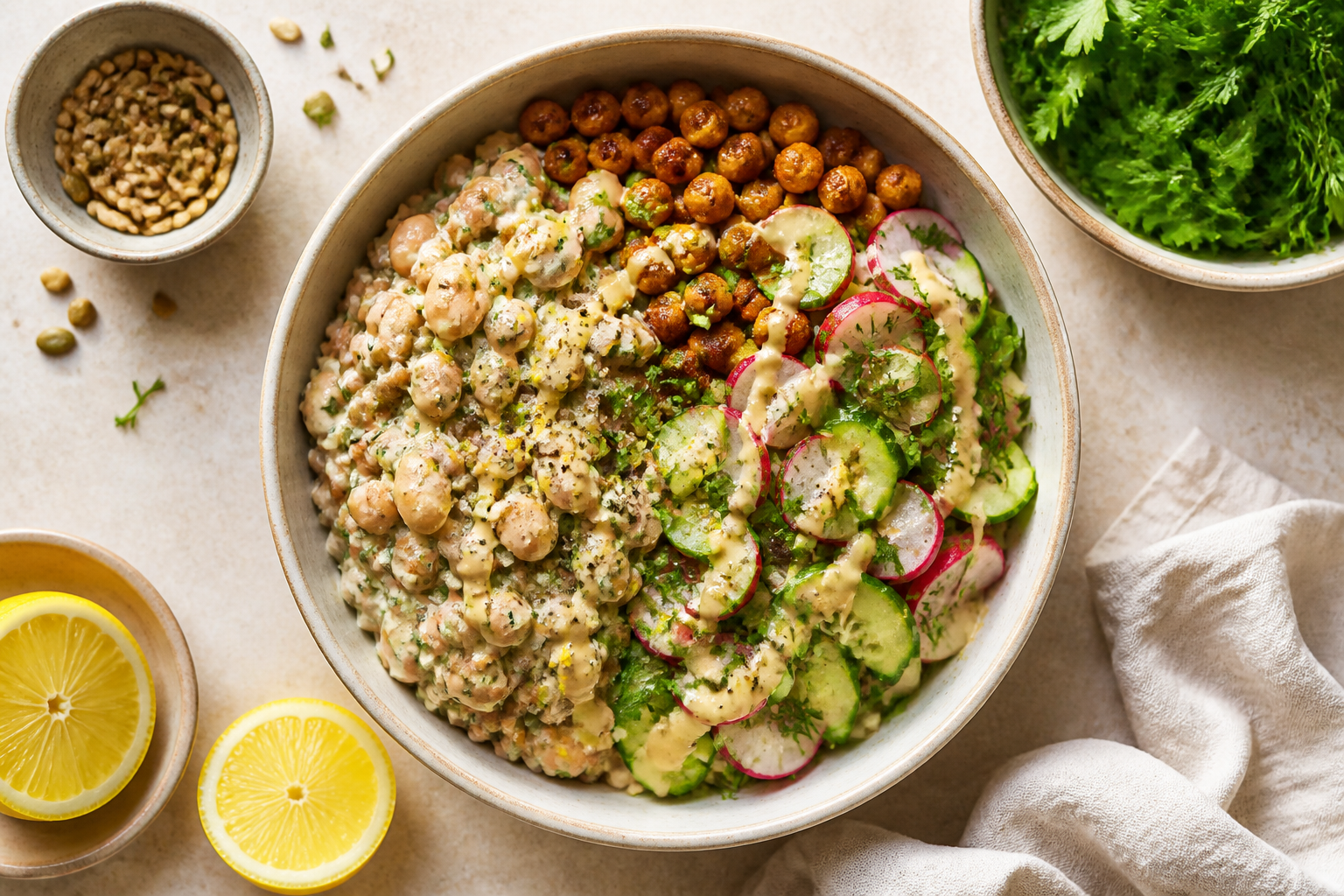
Use chewy barley, brown rice or another preferred grain with lentils as the anchor. Add shredded radish, cucumber or cabbage for contrast. Bridge with a lemony seed or tahini-style dressing and finish with herbs. Swap the grain and vegetables without changing the architecture.
Toast or flatbread
Spread seasoned crushed beans as the anchor. Add a pile of crisp slaw or quick-pickled vegetables. Use herb oil, tomato relish or a bright pepper sauce as the bridge. Toasted bread contributes a second kind of structure.
Noodle bowl
Coat noodles and tofu or edamame in a savory aromatic sauce. Add cool cucumber, bean sprouts or lightly cooked greens. Finish with toasted sesame or peanuts where allergies permit. Keep the crunchy portion separate for leftovers.
Soup plus finish
A blended vegetable-and-bean soup forms the anchor. Add roasted chickpeas, corn or seeded croutons for contrast. A herb relish or swirl of seasoned plant-based cream becomes the bridge. The garnish is functional, not decoration.
Tray meal
Roast dense vegetables and chickpeas or tofu on a roomy tray. Add a fresh salad of herbs and crisp vegetables after cooking. Spoon over a sharp, creamy dressing at the table. This method creates different surfaces with limited washing up.
Plan components, not identical meals
Meal preparation often fails through repetition. Five complete containers of the same assembled bowl become less appealing each day, and crisp elements soften in storage. Instead, prepare modules:
- One cooked grain or other substantial base.
- One pot of beans or lentils, or a prepared soy component.
- One tray of browned vegetables.
- One washed and cut fresh component.
- One bridge sauce and one dry crunchy finish.
These modules can become a bowl, wrap, soup addition, toast topping or warm salad. Store components according to their safety and quality needs, label them clearly if others share the kitchen, and protect crunchy finishes from moisture. Variety comes from assembly rather than cooking an entirely new recipe every evening.
Use a nutrition guardrail alongside the texture tool
A satisfying texture system does not automatically make a nutritionally complete pattern. Needs vary with age, health, pregnancy, activity, allergies and other factors. People making a major dietary change, managing a condition or feeding children may benefit from individualized guidance from a qualified dietitian or healthcare professional.
For everyday planning, check that meals rotate meaningful sources of protein such as beans, peas, lentils, soy foods, nuts and seeds, with eggs or dairy included for vegetarians who choose them. Include a range of vegetables, fruits, grains and appropriate fats rather than relying on one “superfood.”
Vitamin B12 deserves deliberate attention because reliable natural sources are largely animal-derived. People eating vegan patterns generally need dependable fortified foods or an appropriate supplement plan. Iron in plant foods is absorbed differently from iron in animal foods; pairing iron-containing foods with vitamin-C-rich produce can be useful. Calcium, vitamin D, iodine, zinc and omega-3 fats may also need planning depending on the foods chosen and individual circumstances. Supplements are not automatically harmless, so dose and need should be discussed with an appropriate professional rather than guessed.
Design for budget and low waste
The triangle does not require specialty substitutes. Dried or canned beans, seasonal vegetables, grains, cabbage, carrots, seeds, herbs and a few strong pantry seasonings can produce many combinations. Choose one premium accent if it matters to the dish rather than making every component expensive.
Use stems, leaves and leftovers purposefully where they are edible and suitable. Herb stems can flavor a sauce, slightly stale bread can become a crisp finish, and roasted vegetables can fold into the next day’s soup. Track what the household actually eats. A bargain ingredient thrown away is not economical.
When trying an unfamiliar product, buy a small amount and assign it a job within the triangle. A purchase without a planned role often becomes cupboard archaeology.
Serve mixed tables without making separate dinners
A modular meal works well for households with different preferences. Put a plant-based anchor at the center, offer several contrasts and bridges, and let diners assemble. Clearly identify allergens and avoid cross-contact where someone has an allergy or other medical requirement.
This approach avoids presenting vegetarian or vegan food as a side dish missing its “real” center. Everyone begins with the same coherent architecture. Optional additions can sit alongside it without defining whether the base meal is complete.
A seven-meal texture experiment
For one week, photograph or briefly note each main meal before eating. Record the anchor, contrast and bridge. Afterward, add one sentence: what became monotonous first? Do not score morality, calories or visual perfection. The purpose is to notice structure.
- Identify which corner was missing when a meal felt flat.
- Notice whether crunch survived storage and travel.
- Find the two bridge sauces that worked with the most anchors.
- List ingredients that successfully played two different texture roles.
- Choose one change for the following week rather than redesigning everything.
Patterns appear quickly. Perhaps breakfast needs chew, lunch needs acidity or dinner needs a more substantial anchor. The answer may be a small technique change rather than another recipe collection.
A memorable plate has a rhythm
Plant-based cooking becomes easier when the cook stops asking every ingredient to imitate something else and starts designing how the whole meal behaves. The anchor creates substance. Contrast keeps attention alive. The bridge carries flavor across the plate. Temperature, aroma and sound deepen the pattern, while a separate nutrition check keeps sensory success connected to everyday needs.
The triangle is intentionally flexible. A bowl assembled from inexpensive leftovers can use it. So can a careful dinner for guests. Once the structure becomes familiar, recipes turn into possibilities rather than commands. The cook can look at a pot of beans, a half cabbage and yesterday’s grains and see not scarcity, but three corners waiting to be connected.