The Lost-Phone Rehearsal: Build a Travel Recovery Plan Before Your Screen Goes Dark
A missing phone becomes a travel emergency unusually quickly. It may be the room key, boarding pass, map, translator, payment method, camera, address book and second step for signing in to an account. The device itself matters, but the more serious problem is often the bundle of access that disappears with it.
A lost phone travel plan should therefore do more than describe how to find a handset. It should let you protect the device, reach essential trip details and recover important accounts from a computer or another person’s phone. The best way to discover whether that plan works is to rehearse it while your own screen is deliberately out of reach.
This is a resilience exercise, not a promise that every loss will be easy. Device controls, mobile carriers, financial institutions and reporting procedures differ by place and can change. Your plan should record where to find the current instructions for the services you actually use.
See the phone as a bundle of dependencies
Begin by listing what would become difficult if the phone vanished for the next twelve hours. Avoid writing “everything.” Name the function and the consequence. If navigation disappears, can you still state the address of your accommodation? If your airline application is unavailable, do you know the booking identifier? If the phone receives sign-in codes, can you enter your primary email another way?
Sort the list into six bundles:
- Identity and travel: itinerary details, reservations, insurance information and document records.
- Movement: maps, local addresses, transit payment and ride arrangements.
- Communication: important numbers, messaging accounts and travel companions.
- Money: payment applications, bank alerts and cards stored in a digital wallet.
- Account access: passwords, authentication applications and recovery channels.
- Personal data: email, photographs, health information and work material.
The point is not to duplicate the phone completely. It is to find the few dependencies that could stop the trip or expose an important account. A music library can wait. Access to the email account that resets several other accounts may not.
Define a successful first hour
A useful rehearsal has an end condition. Within an hour, you should be able to decide whether the device is merely misplaced or potentially stolen, place it in the appropriate protective mode if available, contact your mobile provider and relevant financial providers when warranted, reach your accommodation and communicate with one trusted person.
That does not mean every call must be completed in sixty minutes. Waiting times and time zones intervene. Success means you can begin each high-priority action without information that exists only inside the missing phone.
Write the order as a decision sequence rather than a rigid stopwatch. A phone apparently left in a locked hotel room presents a different risk from one that disappears immediately after somebody sees the passcode. The plan should let the evidence change the priority.
Prepare the device before departure
A rehearsal cannot compensate for basic protections that were never enabled. Use a strong screen lock and make the automatic lock interval reasonably short. Install operating-system and important application updates. Back up data you would regret losing, then verify that the backup can be reached from somewhere other than the device.
Turn on the platform’s legitimate device-finding and remote-protection controls before the trip. Confirm that the phone appears under the correct account and learn how to reach those controls from a browser. Depending on the platform and settings, they may show a current or recent location, make a sound, mark the device as lost, lock it or erase its data. These functions can depend on power, connectivity and prior configuration.
Check that account recovery details are current. An old phone number or inaccessible email address can turn a small loss into an account lockout. Record the mobile provider’s internationally usable support route, the account identifier it asks for and the device identifier it may need to block service. Keep that record securely away from the phone.
Review what appears on the lock screen. Message previews can expose verification codes, travel plans or personal conversations even when the device remains locked. A useful lost-device message may include a safe alternate contact, but it should not reveal your accommodation room, home address or other unnecessary detail.
Make essential trip details independently reachable
Create a compact recovery packet. It can be a small paper card, a protected digital file reachable from another device, or both. The right format depends on your threat model and comfort. A paper packet works without electricity but can be read if found. An online copy is less visible in luggage but useless if you cannot sign in.
Include only what is needed: accommodation names and addresses, booking identifiers, the number of your travel insurer, your mobile provider’s contact route, financial-provider numbers found through trusted materials, and one or two personal contacts. Add a plain description of where you will find the current lost-device controls, not a clickable shortcut copied from an unsolicited message.
Do not place full passwords, card security codes or an unprotected collection of identity documents on the card. If you carry document copies, understand the rules and risks that apply to your destination and store them separately from the originals. The packet is a bridge to recovery, not a portable archive of everything valuable.
Recover accounts without the missing handset
Authentication is the dependency most often discovered too late. A traveler may know a password yet be unable to receive a code because the code goes to the lost phone. List the accounts that control other accounts, especially primary email, password management, device account and financial access.
For each one, identify a legitimate recovery method that does not rely solely on the handset. Depending on the service, that may be a securely stored recovery code, a trusted second device, a hardware security key or a carefully protected alternate route. Test only enough to confirm access; do not disable useful protection for convenience.
Keep recovery material apart from the phone and do not give a companion unrestricted access to every account. A trusted person can hold a sealed recovery item or know how to reach you without knowing the underlying secret. Couples and families should avoid making every member’s access depend on a single bag or device.
Practice locating, locking and erasing
Remote controls involve judgment. Start by observing what the service actually reports. A location can be delayed or approximate. A dot on a map is not permission to enter private property, confront a suspected thief or follow a device into an unsafe area.
If the device may be nearby in a controlled place, a sound or a call may resolve the problem. If it may be outside your control, marking it as lost or locking it can protect access and display a return message. Follow the current instructions from the device maker rather than a link sent by someone claiming to have found it.
Remote erasure is a consequential step. It can protect data when recovery appears unlikely, but after erasure some platforms can no longer report the device’s location. Insurance or ownership processes may also require information from the account. Learn those implications before the trip so panic does not make the decision for you.
A command may wait until the phone connects. Do not treat an offline status as proof that nothing happened or as proof of theft. Preserve the time, last known circumstances and actions taken in your own brief log.
Protect money and the mobile number
The phone can expose two valuable pathways: payment access and the mobile number used to receive account codes. If theft or unauthorized access is plausible, contact the mobile provider through the route in your recovery packet. Ask what it can suspend, block or transfer and what identification is required. Do not assume that stopping service automatically protects the device account or every application.
Review financial activity from a trusted device. Contact the relevant bank or card provider promptly if payment credentials may be exposed or if you see activity you did not authorize. Liability, reporting deadlines and wallet controls vary, so use the provider’s current procedure rather than relying on a remembered rule from another country.
Be alert for the second message. Someone may claim to have the phone, impersonate a provider or send a sign-in page designed to capture credentials. A legitimate-looking message that includes accurate device details is not proof of identity. Open services independently and never reveal a passcode or recovery code to a supposed finder.
Run the ten-minute tabletop rehearsal
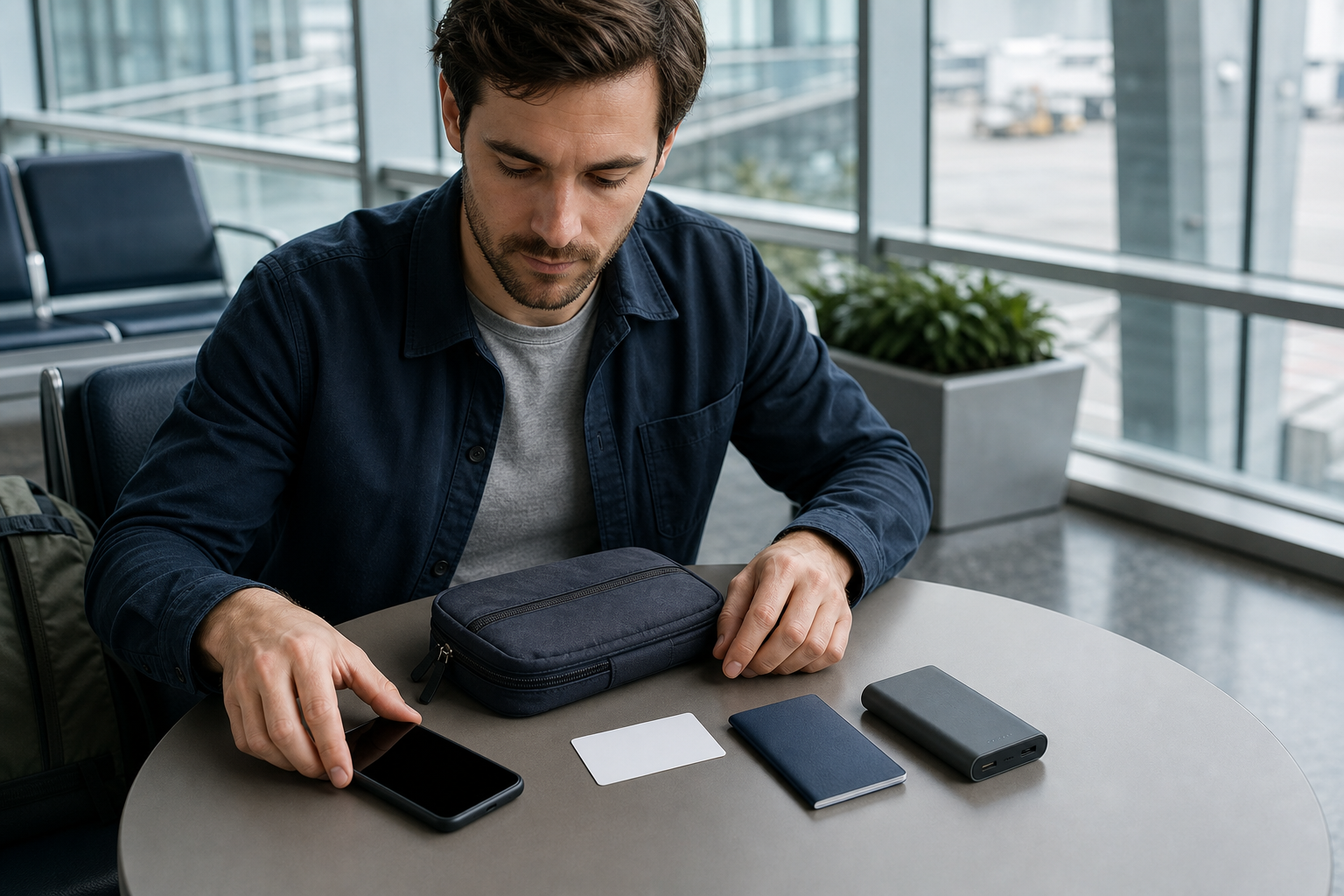
Put the phone in another room. Start with a short scenario: “The phone was last seen on the train twenty minutes ago, and I have arrived at the hotel.” Use only the recovery packet and a borrowed device or computer in guest mode. Do not perform a real erase or falsely report a theft; navigate until the final confirmation and stop.
- State the phone’s last known time, place and circumstances.
- Reach the legitimate device-management page without using a saved link on the phone.
- Explain which protective action you would choose and why.
- Find the mobile and financial contact routes in the packet.
- Reach the itinerary and accommodation address.
- Demonstrate access to one crucial account without approving a destructive action.
- Send a check-in to the trusted person through an alternate route.
Record every point of friction. Perhaps the password manager also requires the missing phone, the provider wants an identifier you did not save, or the booking exists only as a screenshot. Each failure is useful while the device is still safe in the next room.
Rehearse three different branches
Misplaced in a controlled location
Imagine the device is probably in your room, a staffed restaurant or a relative’s car. The immediate need may be careful searching and a sound alert, not erasure. Decide who can check the location without disclosing your unlock code and how you will arrange a safe return.
Potentially stolen after observation
Now assume somebody may have watched the passcode. Account and payment protection become more urgent. Practice reaching a safe place, locking the device, reviewing high-value accounts and contacting the appropriate providers. Any local report should be made through the procedure for that jurisdiction; personal pursuit is not part of the plan.
Dead, damaged or disconnected
A black screen does not always mean theft. Water, impact, a failed battery or lack of network access can create the same practical dependency. Rehearse continuing the day: finding the hotel, meeting a companion, obtaining a ticket and arranging a repair or replacement without sacrificing account security.
Use a calm first-hour sequence
When loss is real, get physically safe first. Reconstruct the last known moment and make a brief, bounded search if the setting allows. Check the device service and choose a protective action based on the risk. Then secure the mobile number, money and controlling accounts as circumstances require. Tell a trusted person how to reach you and preserve a simple action log.
Do not spend the whole hour refreshing a map while other risks remain unattended. Assign a review time. If the location changes, evidence of access appears or safe recovery becomes unlikely, escalate protection. If the phone is found, inspect account activity and security settings before assuming the incident is over.
Rebuild without restoring the same weakness
A replacement device can reproduce the original dependency if every application and setting is restored without review. Change credentials that may have been exposed, end unfamiliar sessions, restore from a known backup and re-enable protective controls. Verify payment and authentication applications one by one.
Update the recovery packet with any new number, device identifier or process. Ask which single failure caused the most trouble. Perhaps it was not device loss at all, but the absence of an accommodation address or an account whose only recovery route was the phone. Fix that dependency while the experience is fresh.
The aim is not to travel as though disaster is inevitable. It is to make one ordinary mishap smaller. Ten minutes of rehearsal can reveal a circular recovery path before an airport, station or unfamiliar street makes it consequential. When the screen goes dark, the traveler still has a sequence, a safe next move and access to the parts of the trip that matter.