Smarter Kitchen Tips That Save Time, Reduce Waste, and Improve Every Meal
Why Smart Kitchen Habits Matter
A well-run kitchen is not just about expensive tools or advanced recipes. It is built on small habits that make cooking easier, safer, and more efficient. Whether you cook every day or only a few times a week, smart kitchen practices can help you save time, reduce food waste, keep your workspace organized, and improve the flavor and texture of your meals.
Many home cooks struggle not because they lack skill, but because their kitchen workflow works against them. Searching for tools in the middle of a recipe, storing ingredients improperly, or skipping simple prep steps can turn even a basic dinner into a frustrating task. By improving a few core routines, you can make the kitchen feel calmer and more productive.
Start with Better Preparation
Read the Recipe Before You Begin
One of the most overlooked kitchen tips is also one of the most important: read the entire recipe before turning on the stove. This helps you understand the timing, identify ingredients that need to be softened or chilled, and avoid surprises halfway through cooking. It also gives you a chance to measure ingredients and set out the equipment you will need.
Use Mise en Place
The French term mise en place means “everything in its place,” and it can transform the way you cook. Chop vegetables, measure spices, and prepare sauces before you begin cooking. This is especially helpful for stir-fries, sautés, and other fast-moving dishes where timing matters. When everything is ready in advance, you are less likely to overcook ingredients or forget a key step.
Keep a Clean-as-You-Go Routine
Cleaning as you cook prevents clutter from building up and makes the end of the meal much easier. Wash knives and cutting boards after use, wipe spills quickly, and return ingredients to the refrigerator as soon as you are done with them. A tidy workspace is safer and helps you stay focused.
Make Your Kitchen More Efficient
Organize by Use, Not by Category Alone
Instead of storing items only by type, think about how you actually use them. Keep oils, salt, pepper, and your most-used utensils near the stove. Store cutting boards, knives, and mixing bowls close to your prep area. Place lunch containers and snack items where they are easy to grab. Organizing based on workflow cuts down on unnecessary movement and saves time during busy cooking sessions.
Sharpen Your Knives Regularly
A sharp knife is safer than a dull one because it cuts cleanly and requires less force. Dull blades are more likely to slip, which increases the risk of injury. You do not need a large knife collection; a chef’s knife, paring knife, and serrated knife are enough for most home kitchens. What matters most is keeping them sharp and using the right knife for the task.
Label and Date Stored Food
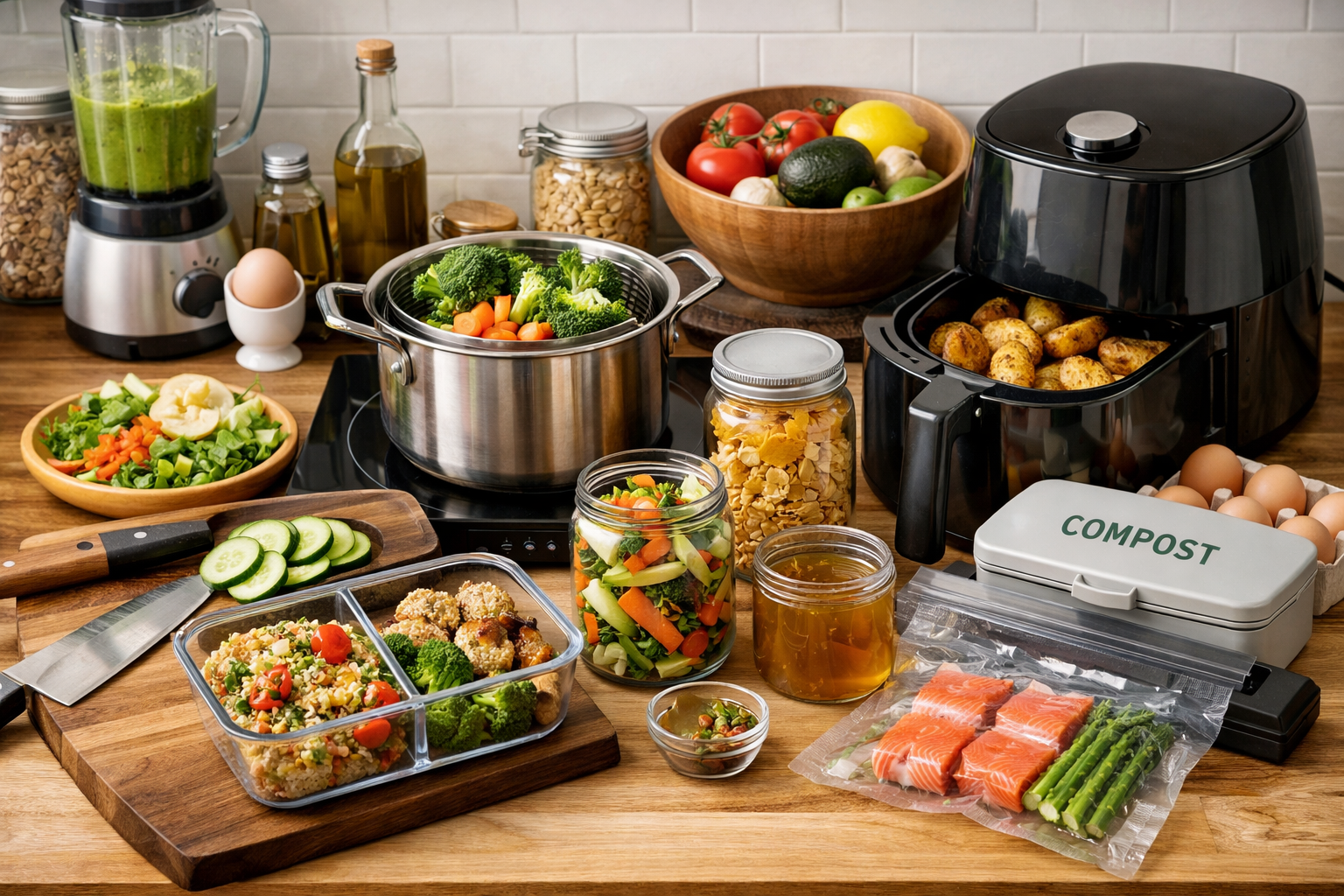
Leftovers and prepped ingredients can quickly become mystery containers. Labeling and dating food helps you track freshness and avoid waste. This is especially useful for soups, sauces, chopped vegetables, cooked grains, and freezer meals. If you batch cook often, this simple habit can save both money and refrigerator space.
Store Ingredients the Right Way
Know What Belongs in the Fridge
Not all produce should be refrigerated. Tomatoes, onions, garlic, potatoes, and many unripe fruits do better at room temperature. Refrigeration can affect flavor and texture, especially for tomatoes and potatoes. On the other hand, leafy greens, berries, herbs, dairy products, and cooked foods should be chilled promptly and stored properly to maintain quality and safety.
Use Clear Containers When Possible
Transparent storage containers make it easier to see what you have on hand. This helps reduce duplicate purchases and encourages you to use ingredients before they spoil. Clear containers are especially useful for dry goods like rice, pasta, flour, oats, nuts, and seeds. They also make pantry shelves look more orderly and easier to manage.
Store Herbs for Longer Freshness
Fresh herbs can spoil quickly if left in plastic packaging. Tender herbs such as parsley and cilantro often last longer when trimmed and placed in a jar with a little water, then loosely covered and refrigerated. Hardier herbs like rosemary and thyme can be wrapped in a slightly damp paper towel and stored in a sealed container. Proper storage extends freshness and preserves flavor.
Small Cooking Techniques That Make a Big Difference
Season in Layers
Rather than adding all the salt at the end, season food gradually throughout the cooking process. A pinch during sautéing, another while simmering, and a final adjustment before serving creates more balanced flavor. The same principle applies to acidity, heat, and herbs. Layered seasoning gives food depth and helps each ingredient taste more defined.
Preheat Pans and Ovens Properly
Cooking often goes wrong when heat is rushed. A properly preheated oven ensures even baking and roasting, while a hot pan helps ingredients brown instead of steam. If vegetables release too much water in the pan, they may never develop the color and flavor you want. Giving your cookware enough time to heat is a simple step that improves results immediately.
Do Not Overcrowd the Pan
When too much food is added at once, moisture gets trapped and the temperature drops. Instead of browning, ingredients steam. This can leave meats pale and vegetables soggy. Cook in batches when needed, especially when roasting vegetables or searing proteins. A little patience leads to better texture and stronger flavor.
Reduce Waste and Stretch Ingredients Further
One of the best kitchen tips for both budget and sustainability is learning to use ingredients fully. Save vegetable scraps to make stock, turn stale bread into croutons or breadcrumbs, and freeze overripe bananas for smoothies or baking. Leftover rice can become fried rice, cooked vegetables can be added to soups or omelets, and extra herbs can be blended into sauces.
- Plan one “use-it-up” meal each week for leftovers and odds and ends.
- Freeze small portions of stock, sauces, or tomato paste in ice cube trays.
- Keep a visible list of perishables that need to be used soon.
- Repurpose roast vegetables, cooked grains, and proteins into bowls, wraps, or salads.
Create a Kitchen That Works for You
The most useful kitchen tips are the ones you can maintain consistently. You do not need a perfect pantry or a restaurant-level setup to cook well. Start with a few changes: sharpen your knives, prep ingredients before cooking, store food more thoughtfully, and keep your space organized around how you actually use it.
Over time, these habits build confidence and make everyday cooking feel less like a chore. A more efficient kitchen supports better meals, less waste, and a smoother routine. In the end, the goal is not perfection. It is creating a practical, enjoyable space where cooking becomes easier and more rewarding every day.