Earth Science Explained: Reading the Dynamic Story of Our Planet
What Is Earth Science?
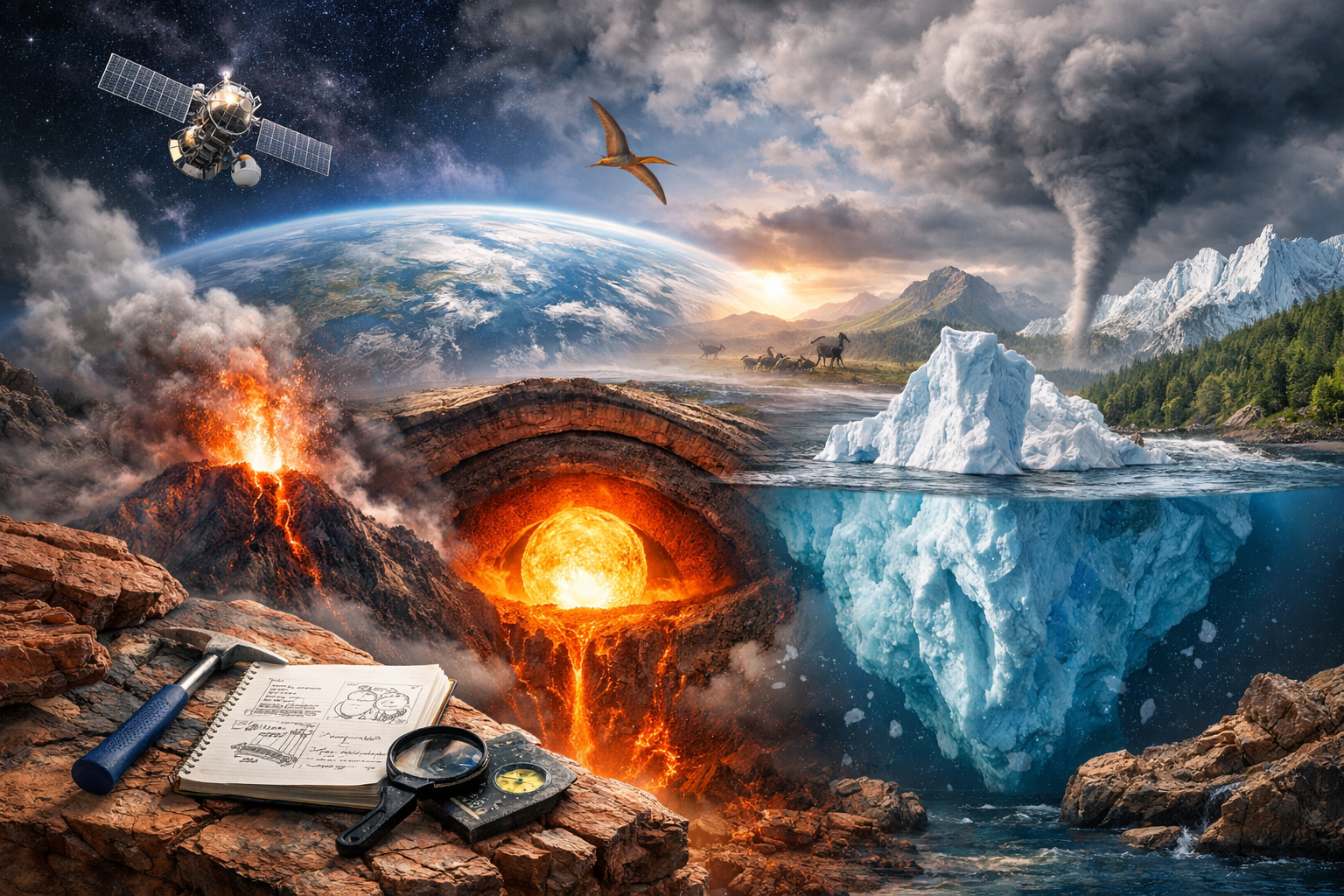
Earth science is the broad field of study devoted to understanding the planet’s structure, history, processes, and place in the solar system. Rather than focusing on one isolated subject, it brings together several scientific disciplines to explain how land, water, air, and life interact over time. Earth scientists investigate everything from volcanic eruptions and mountain building to climate patterns, groundwater movement, and the composition of rocks beneath our feet.
At its core, Earth science treats the planet as a connected system. A storm over the ocean can influence coastal erosion, while tectonic uplift can alter river paths and climate patterns over long periods. By studying these links, researchers can better understand past changes, monitor present conditions, and anticipate future challenges.
The Major Branches of Earth Science
Geology
Geology focuses on the solid Earth, including rocks, minerals, plate tectonics, earthquakes, and volcanoes. Geologists study the materials that make up Earth’s crust and the forces that reshape it. They use field observations, rock samples, and geophysical data to reconstruct ancient environments and identify natural resources such as metals, fossil fuels, and groundwater.
Meteorology
Meteorology is the study of the atmosphere and weather. Meteorologists examine air pressure, temperature, humidity, wind, and storms to understand short-term atmospheric behavior and long-term climate trends. Forecasting severe weather, tracking hurricanes, and modeling changing rainfall patterns are all part of this branch.
Oceanography
Oceanography investigates the physical, chemical, biological, and geological features of the oceans. Since oceans cover most of Earth’s surface, they play a central role in climate regulation, heat transport, and the carbon cycle. Oceanographers study currents, seafloor structures, marine ecosystems, and the ways seawater interacts with the atmosphere and continents.
Astronomy and Planetary Science
Although often viewed as separate disciplines, astronomy and planetary science contribute to Earth science by placing our planet in a larger cosmic context. Studying the Moon, Mars, meteorites, and other planetary bodies helps scientists understand Earth’s formation, early bombardment history, and the unique conditions that support life here.
Earth as a System
One of the most important ideas in Earth science is that the planet operates through interconnected spheres. These include the geosphere, hydrosphere, atmosphere, biosphere, and cryosphere. Each sphere influences the others continuously.
-
Geosphere: the solid Earth, including rocks, soils, and the interior.
-
Hydrosphere: all liquid water, from oceans and rivers to groundwater.
-
Atmosphere: the layers of gases surrounding the planet.
-
Biosphere: all living organisms and ecosystems.
-
Cryosphere: frozen water, including glaciers, sea ice, and ice sheets.
For example, volcanic eruptions from the geosphere can inject particles into the atmosphere, temporarily cooling the climate. Melting ice in the cryosphere raises sea level in the hydrosphere, affecting ecosystems in the biosphere and coastlines shaped by the geosphere. This systems approach is essential for understanding global change.
Key Processes That Shape the Planet
Plate Tectonics
Plate tectonics is one of the foundational theories of Earth science. Earth’s outer shell is broken into large plates that move slowly over the mantle. Their interactions create mountains, trenches, earthquakes, and volcanoes. Convergent boundaries produce subduction zones and powerful seismic activity, while divergent boundaries form new crust at mid-ocean ridges. Transform boundaries generate lateral motion and often produce earthquakes.
The Rock Cycle
The rock cycle describes how igneous, sedimentary, and metamorphic rocks form and transform. Magma cools into igneous rock, weathering and erosion produce sediments that become sedimentary rock, and heat and pressure alter rocks into metamorphic forms. This cycle reveals that Earth’s surface is constantly being recycled through natural processes.
The Water Cycle
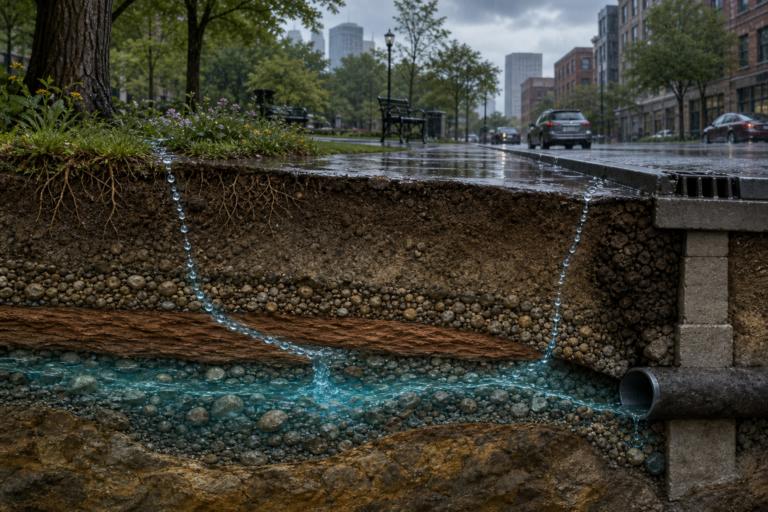
Water continuously moves through evaporation, condensation, precipitation, infiltration, runoff, and storage. This cycle distributes heat, shapes landscapes, supports ecosystems, and supplies freshwater. Changes in precipitation or temperature can disrupt agriculture, ecosystems, and water availability for human communities.
Climate and Energy Balance
Earth’s climate depends on the balance between incoming solar radiation and outgoing heat. Greenhouse gases, cloud cover, surface reflectivity, and ocean circulation all influence this balance. Even small shifts can produce major effects over time, including changes in temperature, precipitation, sea level, and storm intensity.
Why Earth Science Matters
Earth science is not only about understanding the past; it is also vital for solving present-day problems. It helps societies prepare for natural hazards such as earthquakes, floods, wildfires, tsunamis, and landslides. It guides resource management by identifying safe water supplies, evaluating soil stability, and locating energy and mineral deposits.
It also plays a major role in environmental decision-making. Climate change, biodiversity loss, coastal erosion, desertification, and pollution all involve Earth systems. Scientists use satellite data, computer models, field measurements, and laboratory analysis to track these issues and inform public policy.
In cities, Earth science supports better infrastructure planning by assessing flood risks, heat patterns, and ground conditions. In agriculture, it improves understanding of soils, drought, and seasonal climate variability. In public safety, it strengthens early warning systems for hurricanes, volcanic eruptions, and extreme weather events.
Tools and Methods Used by Earth Scientists
Modern Earth science relies on a powerful mix of traditional observation and advanced technology. Fieldwork remains essential, as scientists map rock layers, collect sediment cores, and measure environmental conditions directly. At the same time, remote sensing from satellites allows researchers to monitor forests, glaciers, sea surface temperatures, and land use changes across the globe.
-
Seismographs record earthquake waves and reveal Earth’s internal structure.
-
GPS measurements track tectonic plate movement with high precision.
-
Satellites observe weather systems, ocean color, ice extent, and atmospheric gases.
-
Computer models simulate climate, groundwater flow, and volcanic activity.
-
Radiometric dating helps determine the ages of rocks and fossils.
These tools allow scientists to ask larger questions and test ideas with increasing accuracy. As data collection improves, Earth science becomes even more important in forecasting change and reducing risk.
The Future of Earth Science
The future of Earth science lies in integration. Researchers are combining geology, ecology, chemistry, physics, and data science to understand rapid planetary change. Questions about clean water, energy transition, carbon storage, resilient cities, and disaster adaptation all depend on Earth system knowledge.
As human activity continues to influence natural processes, Earth science provides a framework for living more responsibly on a dynamic planet. It reminds us that Earth is not static. It is active, interconnected, and constantly evolving. Understanding that reality is essential for protecting both natural systems and human societies in the centuries ahead.