Plan a Food Market Visit Around One Meal, Not Every Stall
Your saved food-market list has twelve stalls, three must-try dishes, and a snack recommended by someone who visited years ago. You arrive hungry and spend the first half hour comparing queues. By the time you order, the visit feels more like completing a route than enjoying a meal.
A simpler plan is to choose one meal as the anchor and treat the rest as optional. You still prepare, but the preparation helps you make decisions on the day rather than requiring every stall to match an old itinerary.
Decide what kind of visit you want
A produce market, a wholesale district, and a market centered on ready-to-eat food can offer very different experiences. Before going, decide whether your main aim is breakfast, lunch, shopping for ingredients, or browsing with a small snack.
For a meal, choose a broad priority such as a local specialty you have not tried or a dish prepared by a particular type of stall. That leaves room for an alternative if the first choice is closed or the queue is longer than you want.
A visit focused on shopping needs a different plan. Consider how you will carry purchases and whether they are appropriate for your accommodation and onward journey. Buying ingredients without a way to use or store them can turn an enjoyable discovery into an awkward obligation.
Check the current setup before leaving
Use the market’s official visitor information for trading days, access, facilities, and any local guidance. Check individual traders where their opening arrangements matter to your plan. A market being open does not guarantee that every stall is operating or serving the same menu.
Look for information about seating, toilets, accessibility, payment methods, and bag storage. These details can affect a family visit or a trip with limited mobility more than a long list of recommended dishes.
Avoid assuming earlier always means better. Some markets serve business buyers during part of the day, while ready-to-eat traders may keep different hours. Plan around the purpose of your visit and the market’s own advice.
Build a short list with an alternative
Select a primary meal option and one realistic backup. Add a drink or dessert only if you want it. This gives you enough direction to begin without turning an unexpected queue into a failed visit.
Agree on priorities with your companions before splitting up. Does everyone want to sit together? Is one person happy to queue while another browses? Choose a meeting point that does not block a stall or an entrance.
Set a rough spending limit that includes drinks, small purchases, and transport. Check prices before ordering, especially where portions or add-ons are unclear. The point is to reduce decisions made under pressure, not to account for every possible bite in advance.
Take a brief look before committing
If the layout allows, make one short pass through the relevant area. Notice what is open, how portions look, and where customers eat. Resist the urge to walk the entire market repeatedly in search of a theoretically perfect choice.
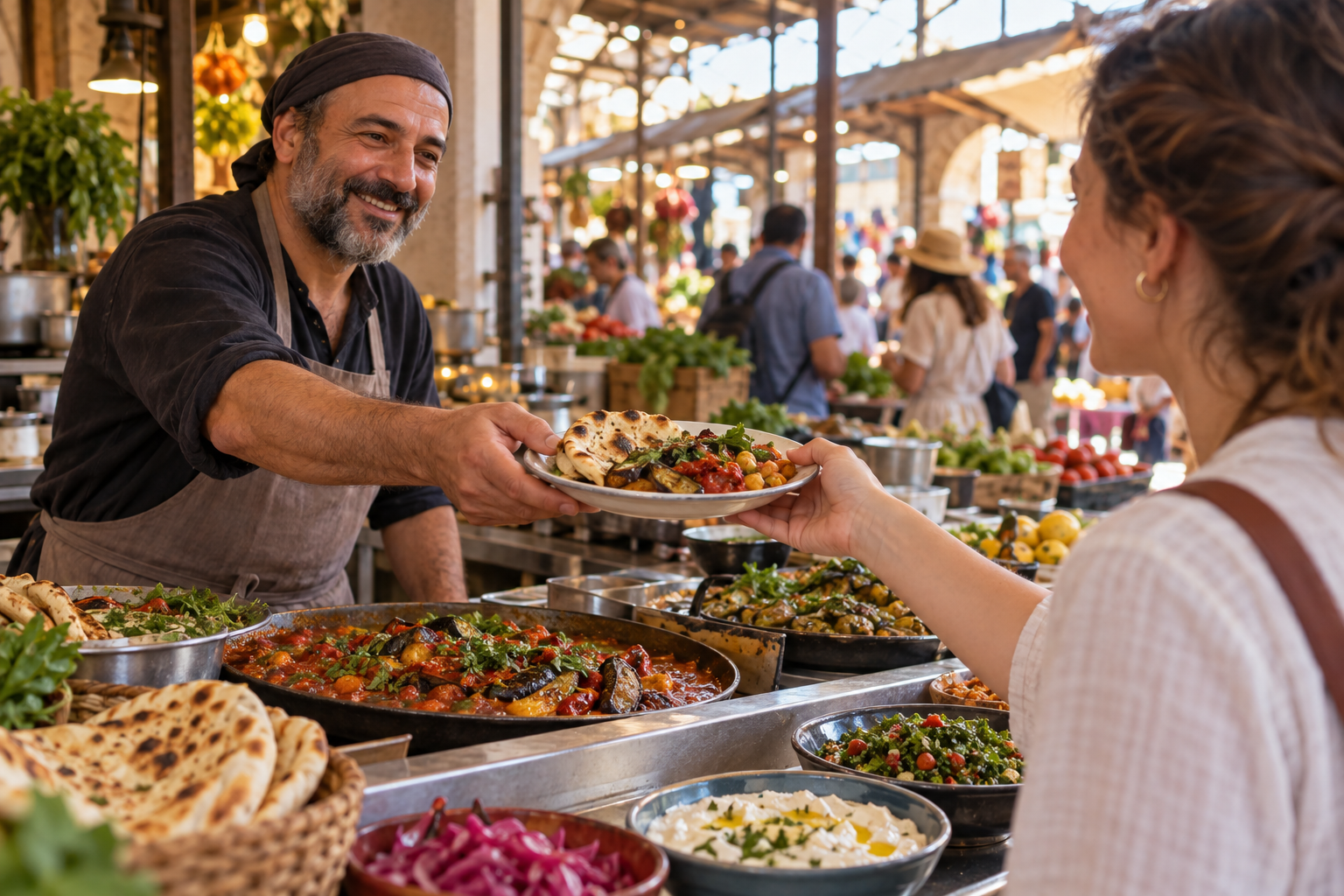
Ask a concise question when you need information: what is in the dish, how large is the portion, or where should you collect it? Choose a moment when the vendor can answer without interrupting another order.
If you have a food allergy or another dietary requirement, communicate it clearly and do not rely on appearance or guesswork. A translation aid can help explain a question, but it does not establish that a dish is suitable. If the necessary information is unavailable, choose another option.
Follow the market’s own way of working
Observe where the queue begins, when customers pay, and whether ordering and collection happen at different points. If you are unsure, ask. A familiar-looking counter does not guarantee the same system you use at home.
Check where eating is permitted. Some markets expect customers to use designated areas rather than eat while walking through narrow lanes. Keep entrances clear, avoid touching products without permission, and ask before taking close photographs of vendors or their work.
Sampling is an invitation from the trader, not an automatic part of the admission experience. Follow any signs or requests, and remember that the market is also a workplace and a place where local customers need to shop.
Leave room for one unplanned choice
Once you have eaten, decide whether you still want to browse or try something else. You do not need to order another dish merely because it was saved on your list. A conversation, an unfamiliar ingredient, or watching a preparation technique can be part of the visit without another purchase.
Keep a small note about what you enjoyed and where it came from. That is more useful for a return visit than a collection of stall names you barely remember.
A good market plan gives you enough structure to arrive informed and enough freedom to respond to the place in front of you. One satisfying meal and a little curiosity can make a fuller visit than racing between every recommendation.