Composting at Home: Turn Everyday Waste into Garden Gold
Why Composting Matters in the Garden
Composting is one of the most rewarding habits a gardener can adopt. Instead of sending food scraps, fallen leaves, and grass clippings to landfill, composting transforms organic waste into a dark, crumbly material that enriches soil naturally. This finished product, often called black gold by gardeners, improves soil structure, supports beneficial microbes, and helps plants grow stronger without relying heavily on synthetic fertilizers.
For households focused on sustainability, composting also reduces waste volume and lowers the environmental impact of everyday living. Whether you have a large backyard, a modest vegetable patch, or a few outdoor containers, compost can become an essential part of a healthier garden system.
What Compost Is Made Of
Successful compost is created by combining organic materials that break down over time. These materials are often grouped into two categories: greens and browns. Greens provide nitrogen, while browns provide carbon. Microorganisms need both to decompose the pile efficiently.
Common Green Materials
- Fruit and vegetable scraps
- Coffee grounds and paper filters
- Fresh grass clippings
- Plant trimmings
- Tea leaves and tea bags without plastic
Common Brown Materials
- Dry leaves
- Shredded cardboard
- Newspaper in small amounts
- Twigs and small branches
- Straw or untreated sawdust
A healthy compost pile usually benefits from more browns than greens. If the pile becomes slimy or smells unpleasant, it often contains too many wet nitrogen-rich materials. Adding dry leaves, shredded paper, or cardboard can help restore balance.
How to Start a Compost Pile
Starting a compost system does not need to be complicated. You can use an open heap, a wooden bin, a plastic compost unit, or a tumbling composter. The best method depends on your available space, how much waste you produce, and how quickly you want finished compost.
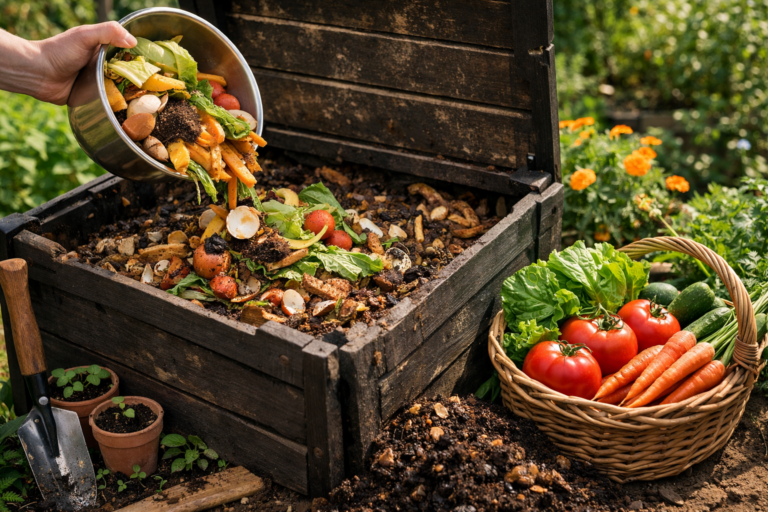
Choose a well-drained outdoor spot with partial shade if possible. Begin with a layer of coarse browns such as twigs or straw to encourage airflow at the bottom. Then add alternating layers of green and brown materials. Chopping or shredding larger pieces helps everything break down faster. Keep the pile damp like a wrung-out sponge, not soaking wet.
Turning the pile every week or two introduces oxygen and speeds up decomposition. If you prefer a low-maintenance approach, you can turn less often, but the compost will take longer to mature.
What to Avoid Adding
Not all organic materials belong in a home compost pile. Some items attract pests, create odors, or introduce harmful pathogens.
- Meat, fish, and bones
- Dairy products
- Greasy or oily food
- Pet waste
- Diseased plants
- Weeds with mature seeds
- Treated wood or glossy paper
These materials are better left out of standard backyard compost systems, especially if the pile does not consistently reach high temperatures.
Understanding the Composting Process
Composting works because bacteria, fungi, insects, and other decomposers feed on organic matter. As they digest these materials, they generate heat and gradually convert the pile into humus-rich compost. A well-managed pile may become noticeably warm in the center, which is a sign that decomposition is active.
Several factors influence the speed of the process. A balanced mix of greens and browns, adequate moisture, good airflow, and smaller particle size all help compost break down efficiently. In ideal conditions, compost may be ready in a few months. Slower piles may take six months to a year.
Signs Your Compost Is Healthy
- It has an earthy smell
- The center feels warm during active stages
- Materials gradually shrink in size
- There are visible insects and worms near cooler areas
Signs Something Needs Adjustment
- Bad odor may mean too much moisture or too many greens
- A dry, inactive pile may need water
- Slow decomposition may mean it needs turning or smaller materials
- Pests may appear if food scraps are exposed
Using Finished Compost in the Garden
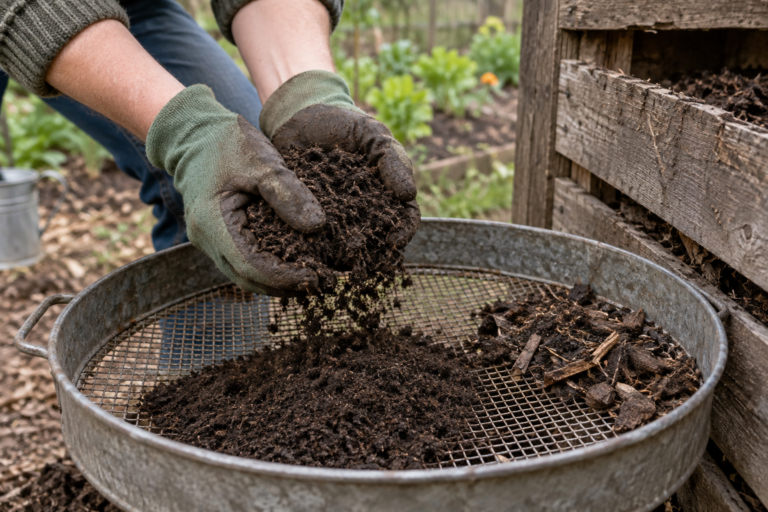
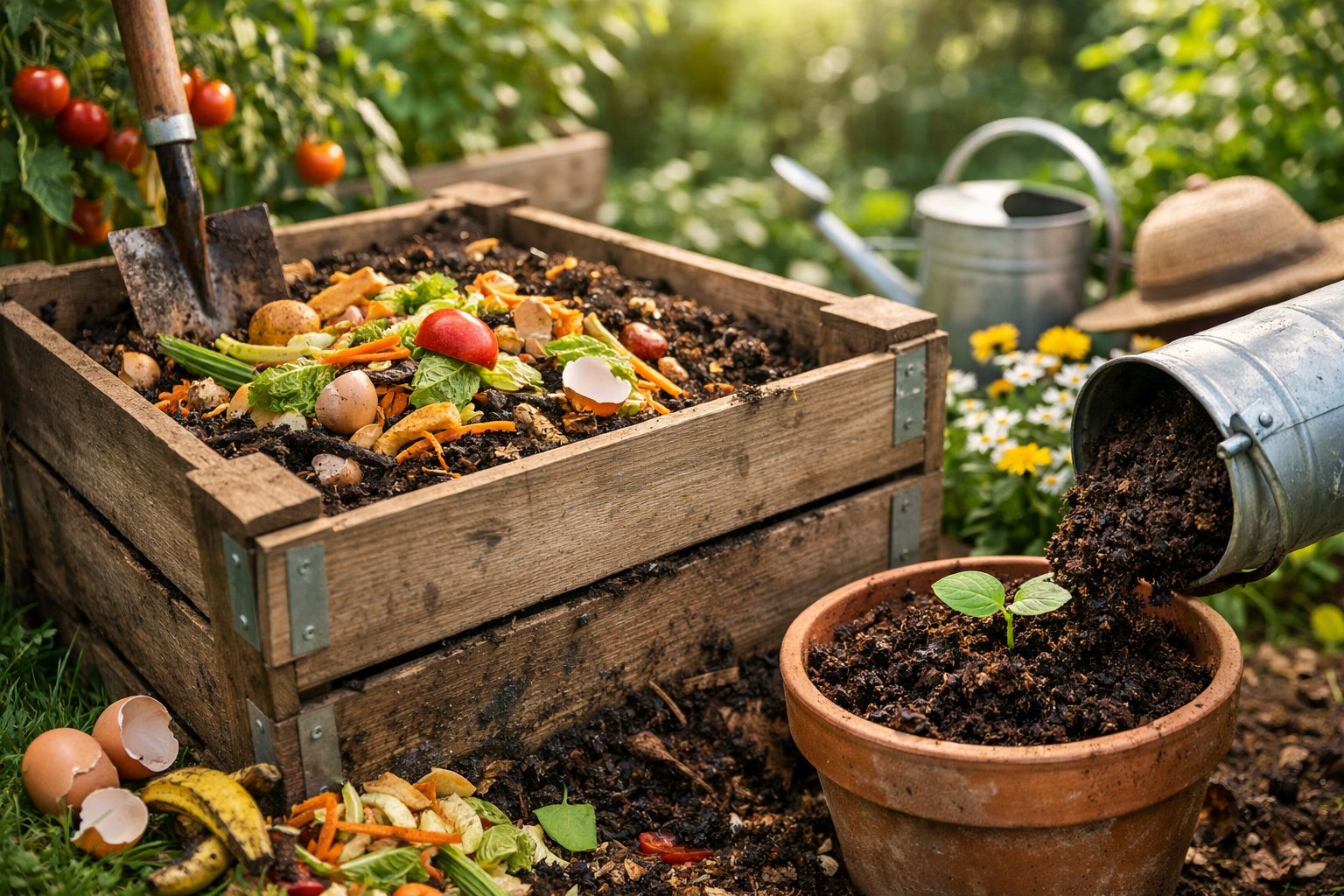
Finished compost is dark, loose, and earthy-smelling, with very few recognizable original ingredients. Once ready, it can be used in several ways around the garden. Mix it into vegetable beds before planting to improve fertility and soil texture. Spread it around shrubs, flowers, and trees as a natural top dressing. Blend it with potting mixes to support container plants. A thin layer of compost can also help lawns and ornamental beds retain moisture more effectively.
Because compost releases nutrients slowly, it feeds plants over time while also improving the soil’s ability to hold water and air. This makes it especially valuable in both sandy and clay-heavy soils.
Composting Tips for Small Outdoor Spaces
You do not need a large property to compost successfully. Compact compost bins, enclosed tumblers, and small outdoor systems can work well in patios, courtyards, and narrow garden areas. The key is to manage materials carefully and avoid overloading the system with wet kitchen waste.
- Store browns nearby so you can cover fresh scraps immediately
- Chop materials into smaller pieces to save space
- Use a lidded bin to reduce pests and weather exposure
- Harvest compost regularly to keep the cycle moving
If outdoor space is limited, even a modest setup can produce enough compost to enrich planters, raised beds, and decorative borders throughout the year.
Making Compost a Sustainable Garden Habit
Composting is more than a waste-reduction method. It is a long-term investment in soil health, garden productivity, and environmental responsibility. Each banana peel, leaf pile, and handful of coffee grounds becomes part of a natural cycle that returns nutrients to the earth.
For beginner and experienced gardeners alike, composting offers a practical way to grow healthier plants while reducing what goes into the trash. With patience and a little observation, a compost pile becomes a living system that rewards both the garden and the gardener. Over time, this simple habit can transform the way you manage waste and care for outdoor spaces.