
From Star Ratings to Smart Choices: The Modern Buying Guide Playbook
Why Reviews and Comparisons Matter
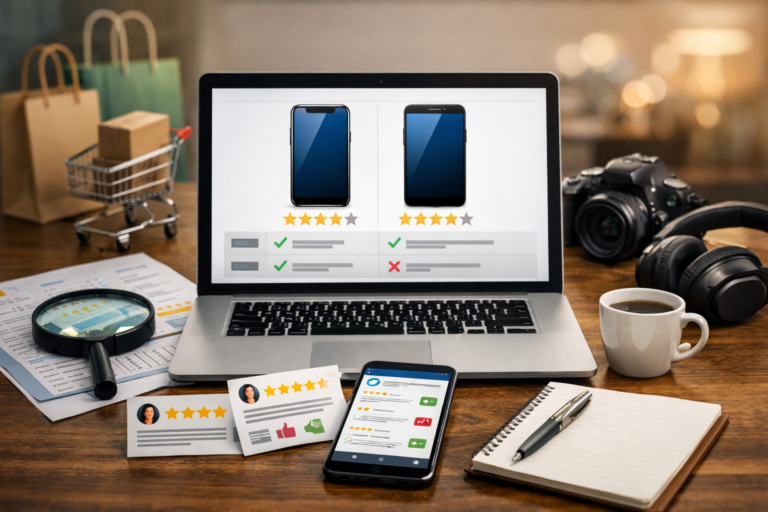
Modern shoppers have more choices than ever, whether they are looking for a laptop, air purifier, coffee maker, mattress, or software subscription. While choice can be useful, it can also create decision fatigue. Reviews, side-by-side comparisons, and well-structured buying guides bridge the gap between a product page and an informed purchase.
A useful buying resource does more than list specifications. It explains what those specifications mean in daily use, identifies who will benefit most from each option, and highlights trade-offs that may not be obvious at first glance. The goal is not to find a product that is universally perfect; it is to find the product that best matches a shopper’s budget, priorities, and expectations.
The Difference Between Reviews, Comparisons, and Buying Guides
Although these formats often appear together, each serves a distinct role in the buying journey.
Product Reviews
A product review examines one item in detail. It may cover design, setup, performance, reliability, comfort, customer support, pricing, and long-term value. The strongest reviews combine hands-on observations with verified specifications and explain both strengths and limitations. A glowing score without context is less useful than a balanced assessment that reveals why a product excels for one type of buyer but falls short for another.
Product Comparisons
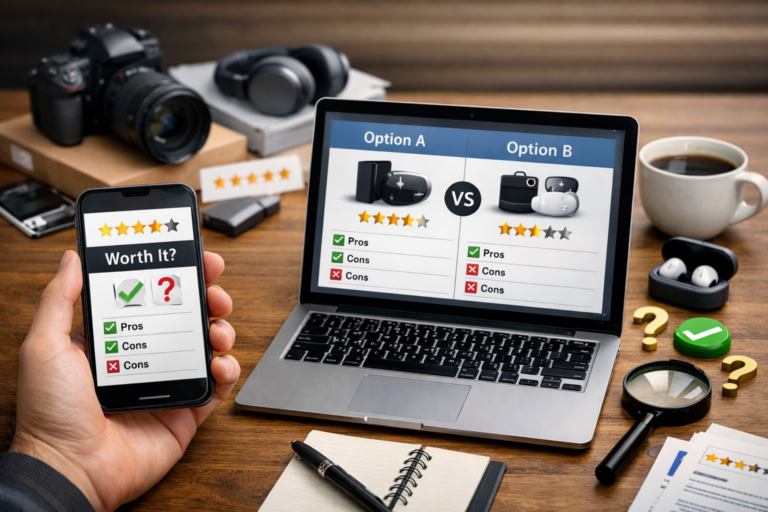
A comparison evaluates two or more competing products against the same criteria. This format is especially helpful when options share similar prices or features. A meaningful comparison does not simply declare a winner. Instead, it identifies where each model leads. One vacuum may offer stronger suction, for example, while another is lighter, quieter, and easier to maintain.
Buying Guides
A buying guide is broader and more educational. It helps readers understand an entire product category before narrowing their choices. For example, a guide to buying headphones may explain sound profiles, battery life, noise cancellation, fit, codec support, and microphone quality. It gives readers the vocabulary and decision framework they need to evaluate products independently.
How to Read Reviews Critically
Not every review deserves equal trust. Good shoppers look beyond a headline score and consider how the evaluation was made. First, check whether the review explains its testing process or sources. Specific details, such as battery runtime under a defined workload or noise levels measured in a particular setting, are more valuable than vague claims that a product is “excellent.”
Second, distinguish between a product flaw and a mismatch of expectations. A compact travel camera may receive criticism for lacking advanced manual controls, but that does not make it a poor choice for casual travelers. Likewise, a premium appliance may be expensive but deliver better materials, warranty coverage, and serviceability over time.
Third, review the publication date. Product lines change quickly, especially in technology, beauty, home appliances, and subscription services. An older review may refer to discontinued features, outdated prices, or previous software versions. Current reviews are particularly important when a product receives frequent updates.
- Look for clear testing criteria and real-world examples.
- Read both advantages and drawbacks before considering a score.
- Check dates, model numbers, and regional product variations.
- Compare expert findings with patterns in verified customer feedback.
- Be cautious of reviews that only repeat marketing language.
Comparing Features That Actually Affect Ownership
Specifications can be persuasive, but the longest feature list does not always produce the best experience. Effective comparisons focus on the factors that shape ownership after the purchase.
Price and Total Cost of Ownership
The initial price is only one part of the equation. Consider replacement parts, consumables, accessories, repairs, shipping, subscriptions, energy use, and warranty extensions. A cheaper printer may become costly because of ink prices, while a more expensive robot vacuum may save money if replacement components are widely available and reasonably priced.
Performance in Relevant Conditions
Performance should match the buyer’s environment. A high-powered blender may matter to someone making frozen smoothies daily, but it may be unnecessary for occasional soups and sauces. Similarly, a gaming laptop should be compared by sustained performance, display quality, cooling, and portability rather than processor branding alone.
Usability and Maintenance
A product that performs well but is frustrating to use can lose its appeal quickly. Look at setup time, controls, cleaning requirements, app reliability, storage needs, and accessibility. Maintenance is especially important for products such as espresso machines, air purifiers, lawn equipment, and smart-home devices.
A Practical Framework for Making the Final Choice
Before selecting a product, create a short list of non-negotiables. These are features or conditions that a product must meet, such as a maximum budget, a required size, compatibility with existing equipment, or a specific warranty length. Then identify your preferred features, which are valuable but not essential.
Next, compare three to five realistic options rather than dozens. Too many choices can make small differences feel more important than they are. Assign extra weight to the factors you will notice most often. A commuter may prioritize weight and battery life in a laptop, while a home-based designer may value screen accuracy and connectivity.
Finally, decide whether it is the right time to buy. New releases, seasonal sales, bundle offers, and product refresh cycles can affect value. However, waiting indefinitely for a better model can be counterproductive when a current option already meets your needs.
The Best Buying Decision Is Personal, Not Universal
Reviews and comparisons are decision tools, not replacements for personal judgment. The best product for a family with pets may not be the best one for a student in a small apartment. By using reliable reviews, comparing relevant features, and applying a clear set of priorities, shoppers can spend less time second-guessing and more time enjoying what they buy.