Mobile Gaming Unlocked: How Smartphones Became a Global Gaming Powerhouse
The Rise of Mobile Gaming
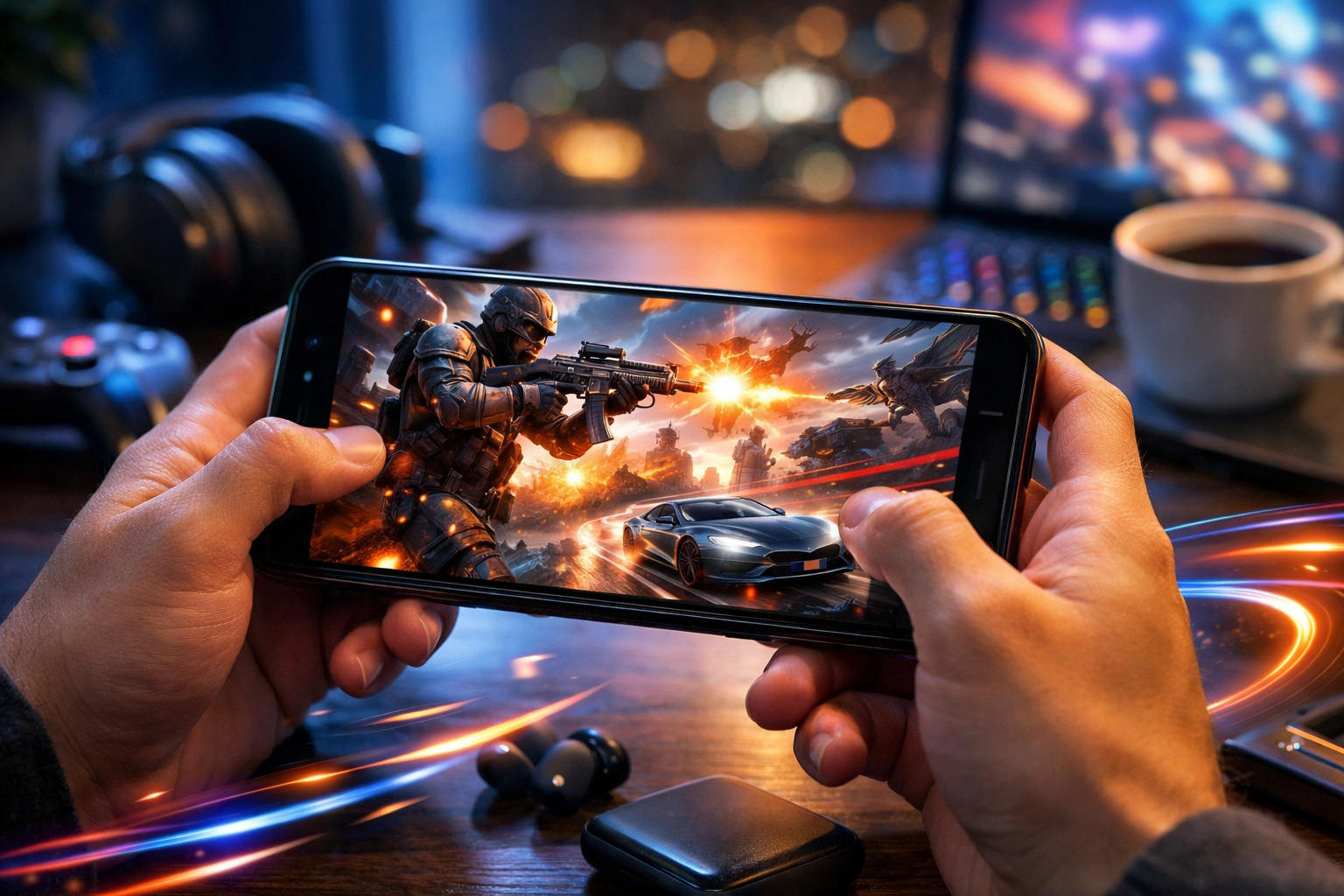
Mobile gaming has evolved into one of the most influential segments of the entertainment industry. What began with basic puzzle games, endless runners, and arcade-style experiences has expanded into a vast ecosystem that includes competitive multiplayer titles, rich role-playing adventures, strategy games, simulation experiences, and cloud-powered console-quality play. Today, smartphones are not just communication devices; they are portable gaming platforms used by millions of people every day.
The popularity of mobile gaming is closely tied to accessibility. Unlike traditional gaming, which often requires a dedicated console, television, or gaming PC, mobile games are available on devices people already own. This convenience lowers the barrier to entry and allows players of all ages and experience levels to engage with games instantly. Whether someone is playing for a few minutes during a commute or spending hours in a multiplayer session, mobile gaming fits naturally into modern lifestyles.
Why Mobile Gaming Appeals to Such a Wide Audience
One of the strongest advantages of mobile gaming is its flexibility. Mobile games can be enjoyed in short bursts or long sessions, making them appealing to casual and dedicated players alike. A simple match-three game may attract someone looking for stress relief, while a complex battle royale or strategy title can satisfy players seeking competition and depth.
Affordability also plays a major role. Many mobile games are free to download, allowing players to try new experiences without a major financial commitment. Even premium mobile titles are often less expensive than console or PC games. This pricing model has helped the market expand rapidly across different regions and demographics.
Another reason for its broad appeal is variety. App stores offer an enormous selection of genres, themes, and play styles. From word games and sports simulations to fantasy adventures and social party games, there is a mobile game for nearly every interest.
Key reasons players choose mobile gaming
-
Easy access through smartphones and tablets
-
Free-to-play and low-cost game options
-
Short session design for busy schedules
-
Large variety of genres and difficulty levels
-
Social features such as chat, co-op, and competitive modes
The Technology Behind the Growth
Modern smartphones are significantly more powerful than earlier generations, and that technological leap has changed what mobile games can deliver. High-refresh-rate displays, improved graphics processors, larger batteries, and advanced cooling systems have made it possible to run visually impressive and mechanically complex games on handheld devices.
Touchscreen controls have also matured. Developers now design interfaces specifically for mobile play, using gestures, taps, swipes, and customizable on-screen layouts. In addition, support for external controllers has helped bridge the gap between mobile and console-style gaming, giving players more control options.
Internet connectivity is another major driver. Fast mobile networks and widespread Wi-Fi access make online multiplayer, live events, regular content updates, and cloud saves far more practical. As 5G networks continue to expand, low-latency gaming experiences are becoming increasingly realistic, especially for real-time competitive games and cloud gaming services.
Popular Genres in Mobile Gaming
The mobile gaming market thrives because it supports many different player preferences. Casual puzzle games remain highly popular because they are easy to learn and rewarding to revisit. At the same time, more advanced genres have grown substantially as mobile hardware has improved.
Action games, multiplayer online battle arenas, shooters, racing games, and open-world role-playing titles now occupy a major place in the mobile space. These games often feature seasonal updates, progression systems, daily events, and online communities that encourage long-term engagement. Simulation and management games also perform well, especially among players who enjoy strategic planning and gradual progression.
Common mobile gaming genres
-
Puzzle and logic games
-
Battle royale and action shooters
-
Role-playing games and adventure titles
-
Sports and racing games
-
Strategy, city-building, and simulation games
-
Social and party-based multiplayer games
The Business Model of Mobile Games
Mobile gaming has introduced business models that are distinct from traditional gaming. The most common is free-to-play, where players can download a game at no cost and choose to spend money on cosmetic items, premium currency, season passes, or convenience features. This model has proven highly effective because it allows a wide audience to enter the game before deciding whether to invest financially.
However, monetization remains a topic of debate. While in-app purchases can support ongoing development and free access, poorly balanced systems can frustrate players if progress feels too dependent on spending. Ads are another common monetization method, especially in hyper-casual games, though excessive advertising may hurt the user experience.
The best mobile games strike a balance between profitability and fairness. Players respond positively when purchases are optional, transparent, and tied to meaningful but non-exploitative rewards. As audiences become more informed, developers are under increasing pressure to create monetization systems that respect player time and trust.
Esports, Streaming, and Social Play
Mobile gaming is no longer a solitary activity. Many of today’s biggest mobile titles are social platforms where friends team up, compete, communicate, and build communities. In some regions, mobile esports has become especially prominent, attracting large audiences, sponsorships, and professional competition.
Streaming and content creation have strengthened this trend. Players watch tutorials, live matches, gameplay highlights, and strategy guides across social platforms and video services. This constant flow of content keeps games visible, strengthens fandoms, and helps new titles gain traction quickly.
Guild systems, ranked ladders, voice chat, friend lists, and cross-platform features all contribute to making mobile gaming a more connected experience. In many ways, mobile games now function as both entertainment products and social spaces.
Challenges Facing the Mobile Gaming Industry
Despite its success, mobile gaming faces several challenges. Market saturation is one of the biggest. With so many titles available, discoverability is difficult for smaller developers. User acquisition costs can be high, making it hard for new games to compete against established brands and major publishers.
Device fragmentation is another issue. Developers must optimize games for a wide range of screen sizes, hardware capabilities, and operating system versions. Security, privacy concerns, and fair monetization practices also remain important topics. Players are becoming more selective about data usage, ad tracking, and in-app spending systems.
There is also the challenge of perception. Although mobile gaming has earned mainstream acceptance, some players still view it as less serious than console or PC gaming. Yet the quality, scale, and innovation seen in many modern mobile titles continue to challenge that outdated assumption.
The Future of Mobile Gaming
The future of mobile gaming looks exceptionally strong. Advances in cloud gaming, augmented reality, artificial intelligence, and mobile chip design will likely push the experience even further. As devices become more powerful and internet infrastructure improves, mobile games may continue closing the gap with traditional platforms.
Cross-platform ecosystems are also likely to grow, allowing players to move seamlessly between phone, tablet, console, and PC. This flexibility will make mobile gaming an even more important part of the broader gaming landscape. Meanwhile, developers will continue experimenting with new storytelling methods, input systems, and live-service formats tailored for portable play.
Mobile gaming is no longer a side category in the gaming world. It is a central force shaping how people discover, play, share, and spend time with games. Its combination of accessibility, innovation, and global reach ensures that it will remain a defining part of digital entertainment for years to come.