
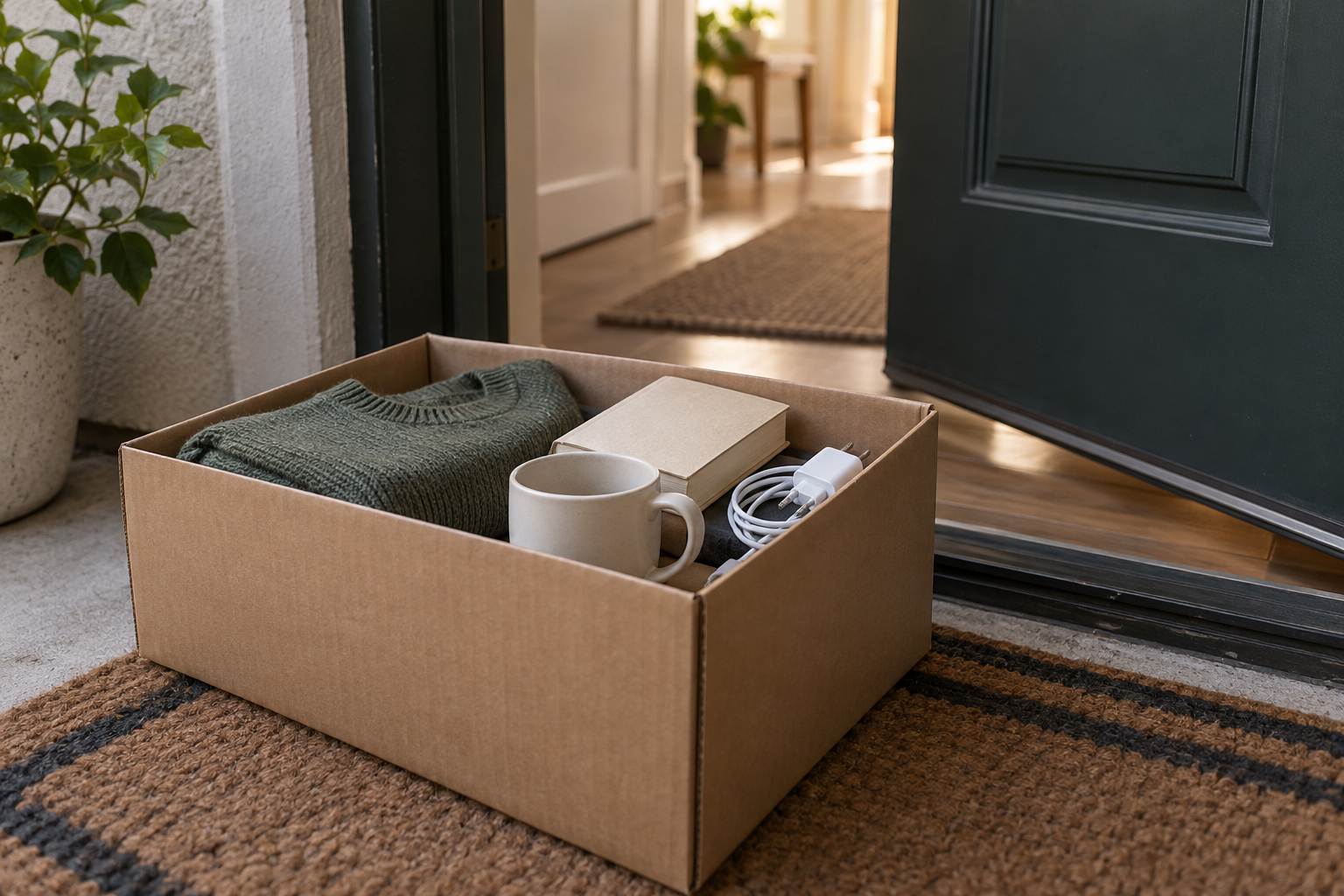
Returning Belongings After a Breakup Without Another Long Argument
The relationship has ended, but a sweater, a spare charger, and several books are still at the other person’s home. Arranging their return can feel like a small administrative task with a much larger conversation waiting behind it. You may want your things back without reopening every disagreement.
A practical plan cannot control someone else’s reaction. It can make your own intentions clear and reduce avoidable uncertainty. Start by deciding what needs to be exchanged, how that can happen, and which conversations you are prepared to have.
Make a short inventory before sending a message
List the belongings you want returned and the items you already have ready to give back. Be specific enough to prevent confusion: the gray winter coat, the blue notebook, or the charger with the long cable. Avoid turning the list into a record of who contributed more to the relationship.
Separate straightforward belongings from anything whose ownership is disputed. A shared purchase, a valuable item, or something tied to a tenancy may need its own discussion or appropriate advice. Do not assume that your personal deadline gives you the right to dispose of another person’s property.
Check the obvious places before contacting them. One complete request is easier to arrange than a series of messages about objects remembered over several days. If you are unsure whether an item is there, say that rather than presenting an assumption as an accusation.
Send one practical proposal
A useful message names the items and offers a workable handover. For example: “I have your jacket and two books ready. Could we exchange them for my charger and shoes on Saturday afternoon? I can leave the box with Sam if that works for both of you.”
This is a sample, not a script you must follow exactly. Choose language that sounds natural and include only arrangements you can actually make. A third person should agree before being offered as the solution.
If a particular time does not suit, offer a small number of alternatives. Avoid “whenever” if you need the exchange completed within a reasonable period. Equally, do not create artificial urgency to force an immediate reply or an in-person meeting.
Choose the handover method deliberately
Meeting face to face is one option, but it is not a requirement for every exchange. An agreed collection point, a trusted intermediary, or a tracked delivery may work better. Decide together who is responsible for packing, delivery costs, and collecting the items.
Do not leave belongings outside an address without agreement. Weather, theft, building access, and the other person’s availability can turn an intended convenience into another problem. If you use a shared reception desk or building staff, confirm that they are willing and permitted to hold the package.
If contact feels unsafe, prioritize an arrangement that avoids meeting alone, and seek support from someone you trust or an appropriate local service. You do not need to accept a private meeting as the price of recovering ordinary belongings.
Set the scope before the conversation expands
You can be courteous without agreeing to discuss the relationship during the handover. A clear sentence is often enough: “I am available to exchange the things, but I am not ready for a longer conversation.” Say this beforehand if you expect different assumptions about the meeting.
If the conversation shifts on the day, return to the agreed task. “I understand there is more you want to say. Today I am only here for the exchange.” Avoid adding a detailed defense of the boundary if that would start the argument you hoped to prevent.
Boundaries describe your participation. They do not guarantee agreement, create an obligation to reply, or entitle you to enter someone’s home. Keep arrangements based on consent and actual access.
Pack for a clean finish
Gather the agreed items in suitable bags or boxes and protect anything fragile. A simple written inventory can help if there are many objects. It need not contain a farewell letter, an explanation of the breakup, or comments about the belongings.
- Check pockets and drawers for small items before sealing the package.
- Keep disputed objects separate from the agreed exchange.
- Confirm the time and method before anyone travels.
- Send a short receipt message when the handover is complete.
If something is missing, describe the item and the next practical step. “The charger was not in the box; please check the desk drawer” is easier to resolve than an accusation about what the omission means.
Allow the exchange to end
Returning belongings does not have to provide emotional closure. You may feel relieved, sad, unsettled, or several things at once afterward. Leave yourself some space rather than scheduling a demanding conversation immediately after the handover.
Once the agreed exchange is complete, acknowledge it briefly and follow the contact boundary you chose. The useful outcome is modest but real: your belongings have been dealt with, and there is one fewer practical reason to keep reopening the conversation.