
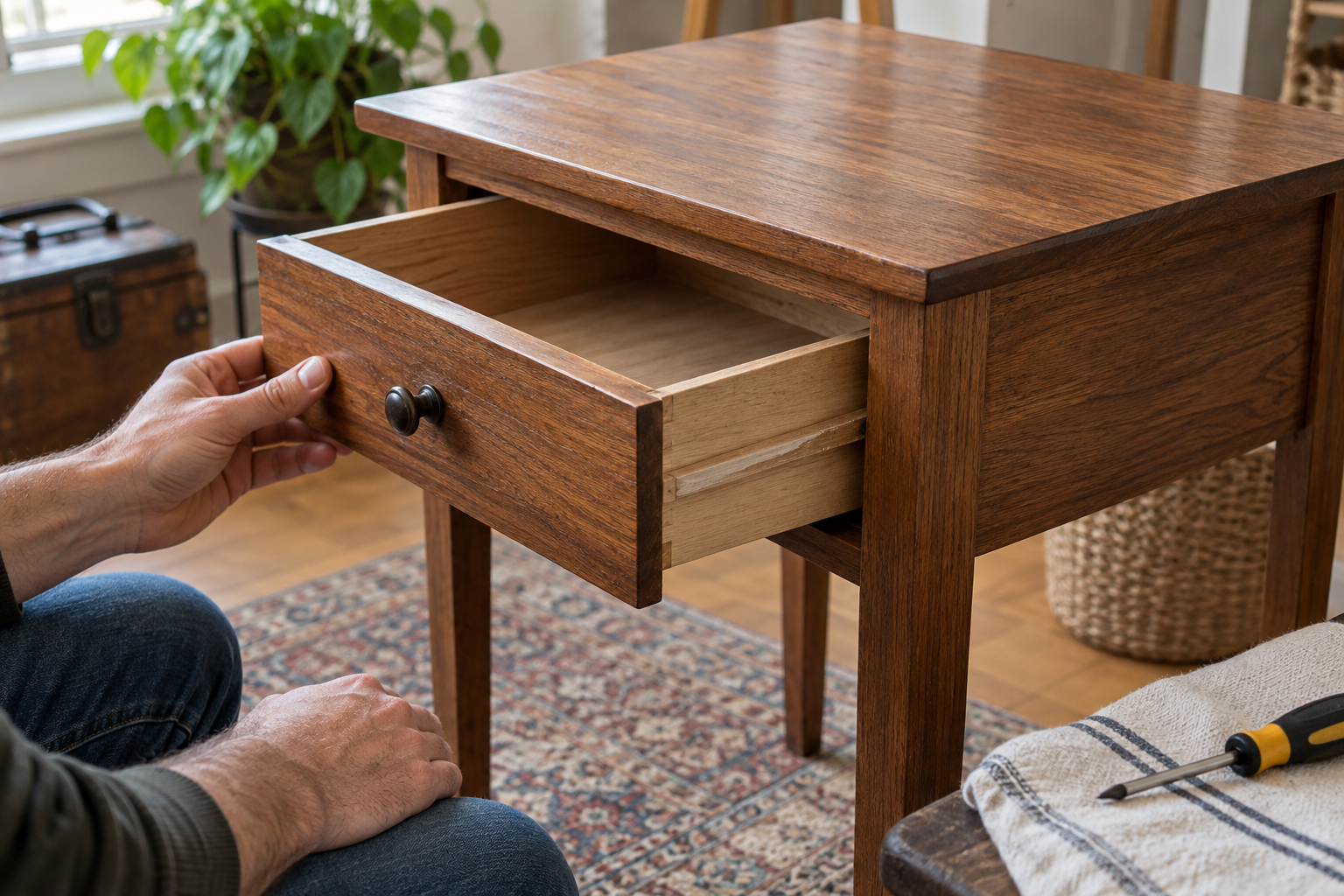
Fix a Sticking Drawer by Finding the Rub First
A drawer that needs a hard tug is easy to blame on old furniture. Sometimes the cause is much simpler: a utensil caught at the back, an overloaded organizer, or a screw that has worked loose. Reaching immediately for sandpaper can remove wood without solving any of those problems.
Start by locating the resistance. This approach suits an ordinary household drawer whose cabinet is sound and stable. Broken joints, a loose cabinet, or badly damaged hardware deserve repair before you keep testing the drawer.
Empty it and observe one slow movement
Remove the contents, including any organizer that could catch above the opening. Keep other drawers closed and make sure the furniture is stable and appropriately secured against tipping. Do not lean on the open drawer or force it beyond its normal travel.
Open and close it gently. Notice whether it catches immediately, scrapes throughout its movement, or stops near the end. Check whether the front appears tilted and whether the gaps around it are uneven. These observations help narrow the inspection; they are clues rather than a diagnosis.
If the empty drawer moves normally, examine the load before changing the furniture. A tall object may catch on the frame. A heavy, uneven load may reveal a problem that is much less noticeable when empty. Return items gradually after inspection rather than immediately replacing everything.
Identify what supports the drawer
Some drawers slide directly on wooden runners. Others use metal slides mounted at the sides, underneath, or along a central support. Removal methods differ. Look for the furniture or hardware instructions before pulling past a stop or pressing a release.
Support the drawer with both hands when removing it, and get help if it is too large or heavy to control. Photograph the original position of any adjustable fittings. That record is useful if a small adjustment makes the fit worse.
With the drawer removed, check behind and beneath it for loose objects. Look for worn or polished areas where surfaces have rubbed, damaged runner parts, protruding fasteners, and a bottom panel that has shifted. Compare the left and right sides instead of assuming the first visible mark explains everything.
Check fasteners and alignment on metal slides
Metal slides need the spacing and alignment specified for their design. A pair that is no longer parallel can bind even if neither slide is worn out. Examine whether the slide has moved at a mounting point or whether a screw head interferes with travel.
Tighten a visibly loose fastener carefully with the appropriate hand tool. Do not drive it harder if it spins without gripping; that indicates a fixing problem requiring repair. Do not substitute a longer or larger screw without checking the material thickness and the hardware’s requirements.
If the manufacturer provides an adjustment procedure, follow it in small increments and test after each change. Avoid bending a slide to make it fit. Damaged rails, missing bearings, or a failed soft-close mechanism may call for a compatible replacement rather than an alignment tweak.
Consider moisture before removing wood
Wood changes dimension as its moisture content changes. A wooden drawer that sticks during humid periods but moves freely at other times may need a different response from one with a permanently loose runner or distorted joint.
Look for a recent spill, a damp room, or a change in where the furniture stands. Address an obvious moisture source and let the piece return to ordinary indoor conditions. Avoid concentrated heat from a hair dryer or heater, which can create a different problem for the wood or finish.
Sanding away material during a temporary swollen condition can leave too much clearance when the wood dries. If the rub persists under normal conditions, establish exactly which sound, unfinished contact surface is responsible before considering material removal. Valuable furniture, veneer, and unknown older painted finishes are good reasons to seek specialist advice.
Use lubrication only where it belongs
Lubricant cannot straighten a misaligned runner or secure a loose joint. Check the maker’s care instructions before applying anything. Some hardware has its own lubrication requirements, and an unsuitable spray can attract dirt or affect adjacent finishes.
For wooden runners, a compatible wax may help once you have established that the parts fit correctly. Test compatibility discreetly and use a small amount. Keep products away from areas you may later need to glue or refinish unless their suitability is clear.
Test the repair under normal use
Reinstall the drawer according to its removal instructions, checking that stops and release catches engage correctly. Cycle it gently while empty, then add a modest, evenly distributed load. Listen and feel for the same catching point you identified at the start.
Change one thing at a time and note what improved. A successful repair is a drawer that moves smoothly, remains properly supported, and closes as intended. Locating the rub first gives you a much better chance of reaching that result with a small, appropriate correction.