
Shrinkflation Math: Compare the Cost of What Is Inside the Package
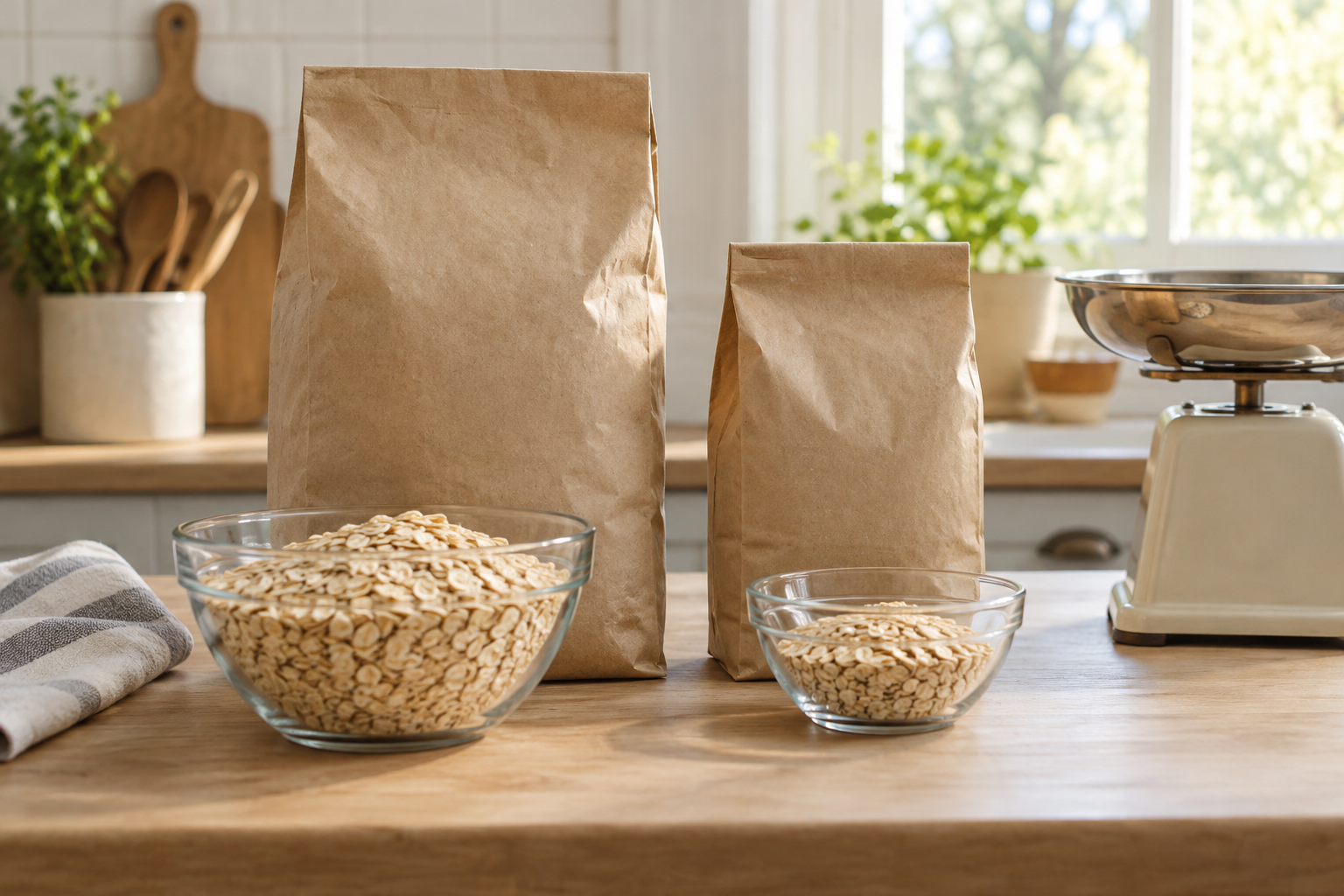
Suppose a familiar packet costs 4.00 and contains 500 grams. Later, a packet of the same product costs 4.00 but contains 450 grams. The shelf price has stayed still, yet the amount you receive for your money has fallen. This is shrinkflation: a reduction in quantity without a matching reduction in price.
The most useful comparison is the price of an equal quantity. That calculation lets you compare changing packages, competing brands, and promotions without relying on how large the container looks. The numbers below are hypothetical examples, not quoted retail prices.
Use one unit for both packages
Unit price is the price divided by the quantity. Choose a unit that is easy to compare, such as 100 grams, one kilogram, one litre, or one item. For the original packet, 4.00 divided by 500 and multiplied by 100 gives 0.80 per 100 grams.
The smaller packet costs 4.00 divided by 450 and multiplied by 100, or approximately 0.889 per 100 grams. To calculate the percentage increase, divide the new unit price by the old unit price, subtract one, and multiply by 100. The effective increase is about 11.1%.
The packet lost 10% of its contents, but the unit price rose by about 11.1%. Those percentages differ because they use different starting quantities. A reduction in size and an increase in price per unit are related calculations, not interchangeable labels.
When price and size change together
Now imagine the 450-gram packet also rises to 4.20. Its unit price becomes approximately 0.933 per 100 grams. Compared with the original 0.80, that is an increase of about 16.7%.
Do not simply add the percentage price rise to the percentage quantity reduction. Comparing the two unit prices accounts for both changes correctly. Keep extra decimal places during the calculation and round at the end; early rounding can distort a close comparison.
A short record is enough for products you buy repeatedly. Note the date, exact product and variant, amount paid, net quantity, and calculated unit price. An old receipt alone may show the price but omit the quantity, so a photograph of the package can fill that gap.
Check what the unit actually measures
Shelf labels can help, but first confirm that both labels use the same basis. A price per kilogram cannot be compared directly with a price per 100 grams. A price per roll may be less informative than a price per sheet if the rolls contain different numbers of sheets.
The right basis can also depend on the product’s function. For concentrated detergent, compare the stated dose for the same washing conditions and follow the manufacturer’s directions. For a food packed in liquid, drained weight may be more relevant to the meal you intend to prepare than total weight.
Quantity is only part of value. A different formulation, material, or quality level can make two similarly named products imperfect substitutes. Calculate the quantity comparison first, then ask whether the products do the same job for you. Avoid attributing every difference to package downsizing.
Put promotions through the same calculation
A multibuy changes the price you must pay and the quantity you must take home. If three 300-gram packets cost 6.00 in total, the offer supplies 900 grams at approximately 0.667 per 100 grams. Compare that with the alternative’s unit price, using the actual conditions of the offer.
Check whether a loyalty account is required, whether the displayed price applies only when buying several items, and whether the variants you need qualify. The headline saving may describe a purchase you were not planning to make.
A lower unit price can also be a poor fit for your storage or consumption. Imagine buying one kilogram for 6.00 but using only 600 grams before the remainder becomes unusable. The cost of the quantity you actually used is 1.00 per 100 grams. A smaller packet might have been the more economical purchase.
What shrinkflation means for inflation figures
Package downsizing does not necessarily disappear from official inflation measurement. The U.S. Bureau of Labor Statistics accounts for changes in product size when calculating its Consumer Price Index. A smaller quantity at an unchanged price can therefore register as a price increase.
That does not make an individual’s shopping basket identical to a national index. Your purchases, brands, promotional access, and timing differ from the broader sample. A personal unit-price record answers a household question; the index answers a wider statistical one.
Start with a few repeat purchases where packaging changes would be easy to miss. Compare equal quantities, check that the products are comparable, and consider how much you will use. The package front attracts attention. The unit calculation tells you what the transaction delivers.