
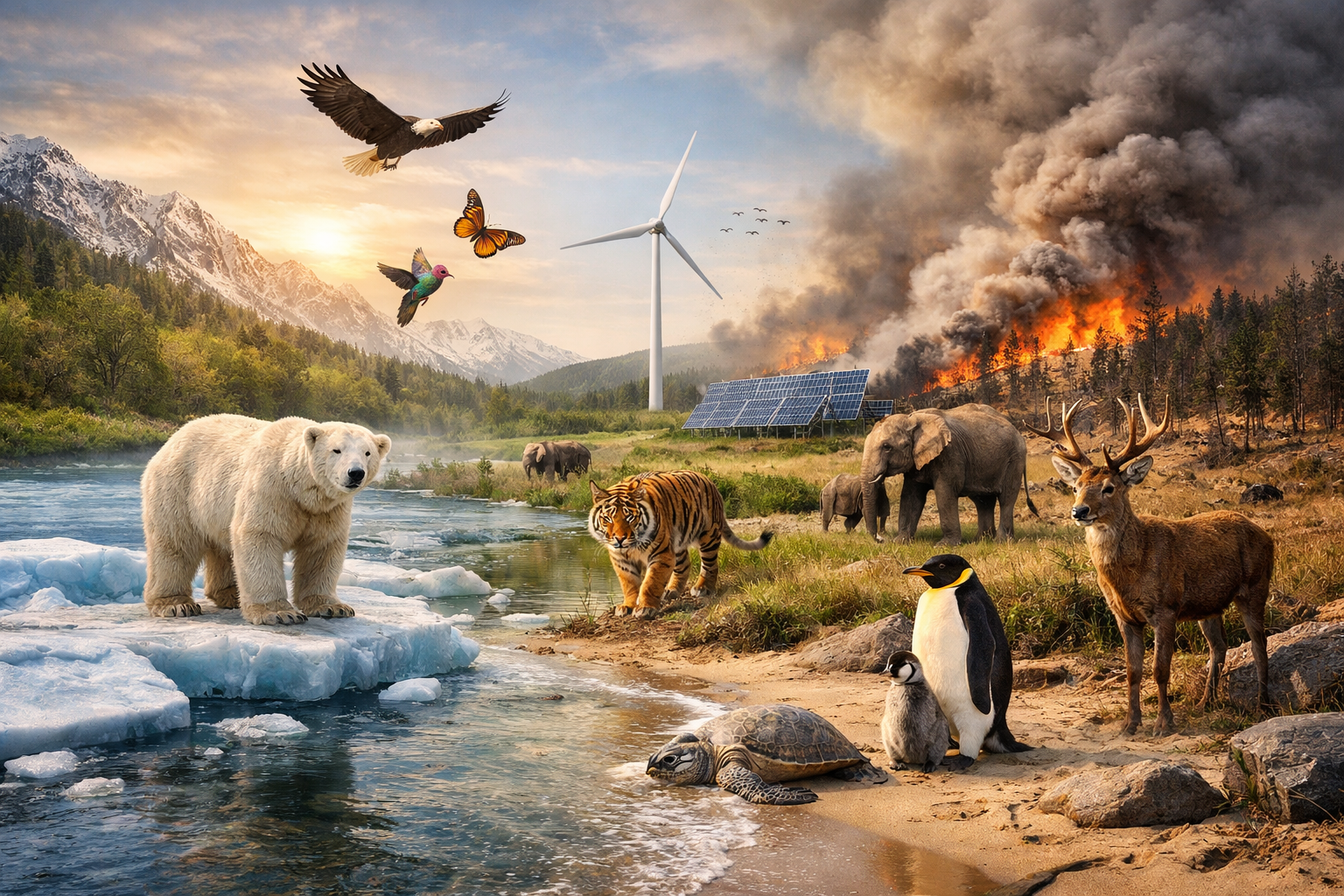
Wildlife in a Warming World: Building a Sustainable Future for Nature
Why Wildlife Matters in Environmental Sustainability
Wildlife is far more than a collection of animals living in forests, oceans, grasslands, and wetlands. It forms the living fabric of ecosystems that regulate climate, maintain soil fertility, pollinate crops, purify water, and support food chains. From insects and birds to large mammals and marine species, wildlife plays a direct role in keeping natural systems balanced and resilient.
When wildlife populations decline, ecosystems become weaker and less stable. Predators help control prey populations, pollinators enable plant reproduction, and decomposers recycle nutrients back into the soil. The loss of even one species can trigger ripple effects that influence many others, including humans. Protecting wildlife is therefore not only a moral responsibility but also a practical necessity for long-term environmental sustainability.
The Biggest Threats Facing Wildlife Today
Habitat Loss and Fragmentation
The destruction of natural habitats remains one of the most serious threats to wildlife. Forests are cleared for agriculture, wetlands are drained for development, and grasslands are converted into roads and industrial sites. Even when some habitat remains, it is often fragmented into smaller patches, making it difficult for animals to find food, shelter, and breeding partners.
Fragmentation also limits migration routes and increases contact between wildlife and human infrastructure. Species that require large territories, such as big cats, elephants, and wolves, are especially vulnerable when landscapes become divided and isolated.
Climate Change
Rising temperatures, changing rainfall patterns, stronger storms, melting ice, and warming oceans are transforming habitats faster than many species can adapt. Some animals are forced to shift their ranges, while others experience mismatches in breeding, migration, or feeding cycles. Coral reefs, polar ecosystems, and mountain habitats are among the most threatened environments.
Climate change also intensifies existing pressures. Drought can reduce water sources, heat stress can affect reproduction, and sea-level rise can destroy nesting grounds for coastal birds and turtles. For wildlife, climate disruption is rarely a single problem; it compounds many others at once.
Pollution
Pollution affects wildlife on land, in freshwater systems, and across the oceans. Plastics entangle marine animals and are consumed by birds, turtles, and fish. Pesticides can poison insects and birds directly or build up in food chains over time. Chemical runoff from farms and factories contaminates rivers, lakes, and estuaries, reducing water quality and harming aquatic life.
Noise and light pollution are also growing concerns. Artificial light can disrupt migration, feeding, and reproduction, while chronic noise from shipping, traffic, and construction interferes with communication and navigation in many species.
Overexploitation and Illegal Wildlife Trade
Unsustainable hunting, fishing, logging, and wildlife trafficking continue to drive population declines worldwide. Some species are targeted for meat, fur, traditional medicine, exotic pets, or luxury products. Others are accidentally caught through bycatch or suffer from overharvesting of the ecosystems they depend on.
Illegal wildlife trade not only threatens species with extinction but also weakens law enforcement, fuels organized crime, and undermines conservation efforts in vulnerable regions.
How Sustainability Supports Wildlife Protection
Sustainability is about meeting present needs without compromising the health of future ecosystems. In the context of wildlife, it means using land, water, forests, and oceans in ways that allow species and habitats to recover and thrive. Sustainable practices reduce pressure on natural systems while preserving biodiversity and ecosystem services.
For example, sustainable agriculture can limit deforestation, reduce pesticide use, and create buffer zones that support pollinators and birds. Sustainable forestry can protect old-growth areas, maintain habitat corridors, and ensure that timber extraction does not destroy ecosystem structure. In marine environments, sustainable fisheries help prevent stock collapse and protect food webs that support seabirds, mammals, and coral communities.
Practical Solutions for a Wildlife-Friendly Future
Protecting and Restoring Habitats
One of the most effective ways to conserve wildlife is to protect natural areas and restore degraded ones. National parks, marine protected areas, community-managed reserves, and indigenous territories all play important roles in safeguarding biodiversity. Restoration efforts such as reforestation, wetland recovery, and native grassland planting can rebuild habitats and reconnect fragmented landscapes.
Supporting Biodiversity in Human Spaces
Cities, farms, and suburbs can also contribute to wildlife conservation. Planting native species, reducing chemical use, preserving hedgerows, creating ponds, and designing wildlife crossings all help animals move and survive in human-dominated environments. Even small actions, such as bird-friendly windows or pollinator gardens, can make a meaningful difference when adopted widely.
Strengthening Policy and Enforcement
Strong environmental laws are essential for protecting wildlife from exploitation and habitat destruction. This includes enforcing anti-poaching measures, regulating trade, setting science-based fishing limits, and requiring environmental impact assessments for major developments. International cooperation is especially important for migratory species and ecosystems that cross political borders.
Empowering Local and Indigenous Communities
Many of the world’s most biodiverse landscapes are cared for by indigenous peoples and local communities. Their ecological knowledge, stewardship traditions, and long-term connection to place are critical to successful conservation. Wildlife protection is often strongest when communities are involved in decision-making and receive fair benefits from sustainable land and resource management.
What Individuals Can Do
Wildlife conservation is not only the work of scientists, governments, and nonprofit organizations. Individuals influence environmental outcomes through everyday choices and public engagement. Consumers can support certified sustainable products, reduce plastic waste, conserve energy, and choose foods linked to lower habitat destruction. Travelers can avoid attractions that exploit wild animals and instead support ethical ecotourism.
- Choose sustainably sourced wood, seafood, and agricultural products.
- Reduce single-use plastics and dispose of waste responsibly.
- Plant native flowers, shrubs, and trees to support local species.
- Avoid pesticides that harm pollinators and other beneficial wildlife.
- Support conservation organizations and community restoration projects.
- Advocate for climate action and stronger biodiversity protections.
A Shared Future for People and Nature
Wildlife conservation and sustainability are inseparable. Healthy animal populations help sustain healthy ecosystems, and healthy ecosystems support human survival, livelihoods, and well-being. As environmental pressures intensify, the need to protect biodiversity becomes more urgent, not less.
A sustainable future depends on recognizing that wildlife is not separate from human progress. It is part of the foundation that makes life possible. By protecting habitats, reducing pollution, addressing climate change, and supporting responsible resource use, societies can create a future where both people and wildlife have the chance to thrive.