
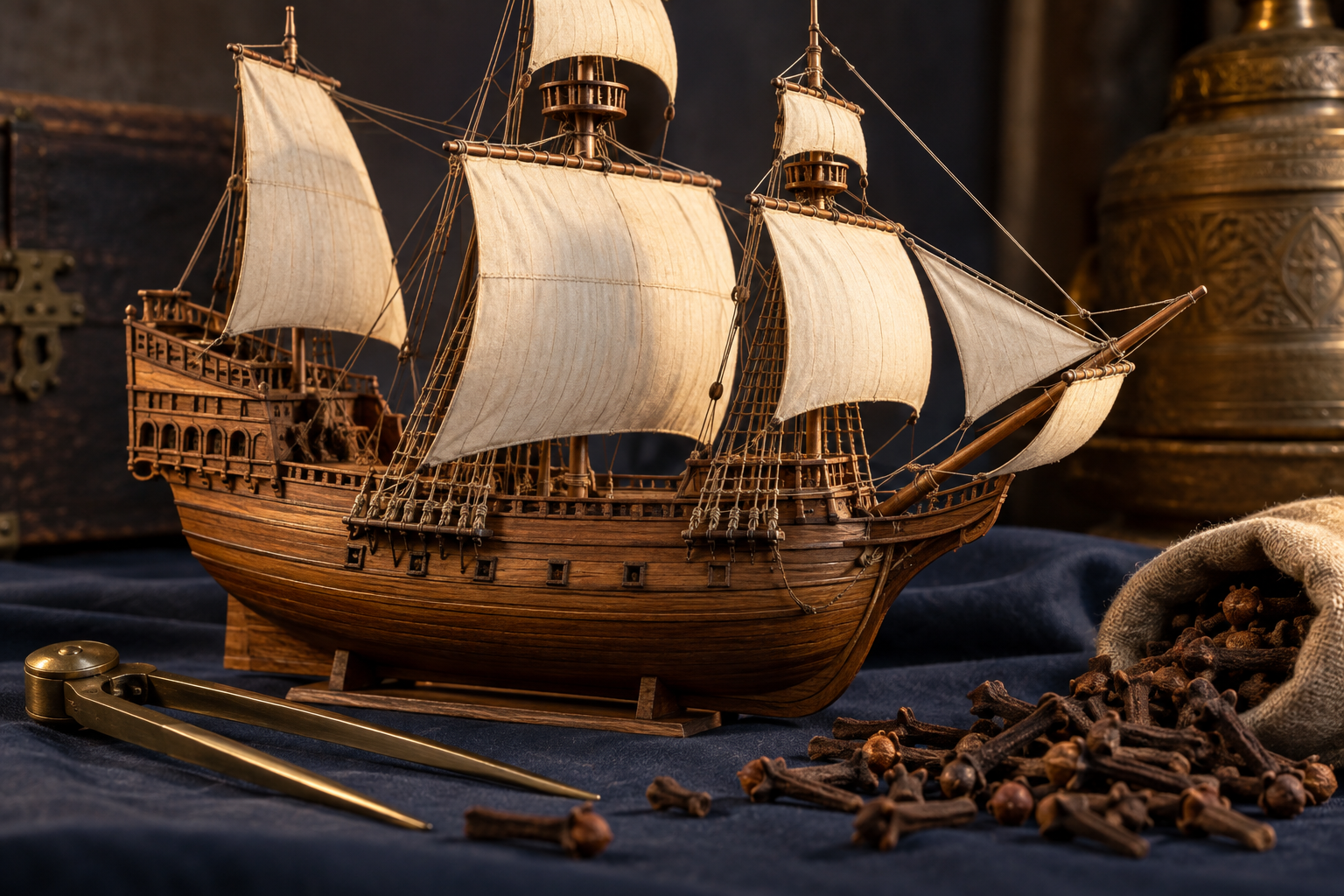
September 20, 1519: The Departure Behind the First Voyage Around the World
On September 20, 1519, five ships commanded by Ferdinand Magellan sailed from Sanlúcar de Barrameda, on Spain’s Atlantic coast. The expedition would eventually produce the first completed circumnavigation of the Earth. Magellan, however, would not return with it.
The anniversary is easier to understand when three things are kept separate: the departure being remembered, the commercial objective that sent the fleet to sea, and the achievement of the survivors who came home. Compressing all three into the story of one explorer hides much of what made the voyage significant.
Why the departure has more than one date
Accounts of the expedition may also mention August 10, 1519. That was the departure from Seville, upriver on the Guadalquivir. The fleet then stopped at Sanlúcar before its September departure to sea. These dates describe different stages of the same undertaking.
This distinction is useful whenever an anniversary appears inconsistent across histories. A journey can have an administrative beginning, a departure from its organizing city, and a final sailing from the coast. Before deciding that one date is wrong, identify the place and action attached to each date.
For September 20, the event being commemorated is the ocean departure from Sanlúcar. The five vessels were Trinidad, San Antonio, Concepción, Victoria, and Santiago. Naming them makes the scale more tangible: this was a fleet with separate crews and different eventual fates.
The destination was a trading region
The expedition sought a westward route to the Spice Islands, also known as the Moluccas, in what is now Indonesia. Magellan was Portuguese but sailed in the service of the Spanish crown. The undertaking belonged to a wider contest over maritime routes, trade, and imperial power.
Spices therefore belong near the center of the account. The fleet was not simply setting out on an abstract exercise in geography. A route had commercial and political value because it could connect a sponsoring power with coveted goods and trading opportunities.
On a modern map, drawing a westward line from Spain to Southeast Asia takes seconds. For a sixteenth-century fleet, converting that ambition into a navigable passage required ships, provisions, information, and decisions made under uncertainty. The completed line on the map can make the original undertaking look much more settled than it was.
Magellan’s voyage and Elcano’s return
The expedition crossed the Atlantic and eventually found the passage through southern South America now called the Strait of Magellan. It continued across the Pacific. Magellan died at Mactan in the Philippines in 1521, before the surviving expedition reached the Moluccas.
That sequence changes the meaning of the familiar phrase “Magellan sailed around the world.” He organized and led the expedition’s early stages, but he did not complete its global circuit. The distinction gives the later part of the journey its proper place in the narrative.
Juan Sebastián Elcano commanded Victoria on the return that completed the circumnavigation. The ship reached Sanlúcar on September 6, 1522. A departure anniversary and a return anniversary mark different achievements separated by almost three years; September 20 should not be described as the day the circuit was completed.
Read the records as different kinds of evidence
Antonio Pigafetta, a participant who survived the expedition, left an account of the voyage. His journal is an essential route into the story because it preserves observations from someone who traveled with the fleet. It is also a particular observer’s account, rather than a view from nowhere.
An engaging narrative encourages readers to follow its central characters. Historical reading adds another task: ask what the narrator could observe, what depended on reports from others, and whose perspective is missing. Admiration, allegiance, language, and the circumstances of writing can all shape how events are presented.
Apply the same care to museum displays and anniversary summaries. A model ship can help explain vessel design without being an original vessel. A later painting can show how an event was remembered without being an eyewitness image. Captions and dates help distinguish the event from its subsequent representation.
What the anniversary can help us notice
Try reading a short account with three questions in mind. What exactly happened on the named date? Who carried the undertaking beyond its original leader? Which documents support the account, and what kind of evidence are they?
Those questions turn a calendar entry into an investigation. September 20, 1519 marks a real departure with an uncertain outcome. Remembering both Magellan and Elcano preserves the difference between beginning the expedition and bringing its surviving ship around the world. Remembering the crews and the people encountered along the route keeps that achievement from shrinking into a single name.