Mixing Wood Tones With the Furniture You Already Own
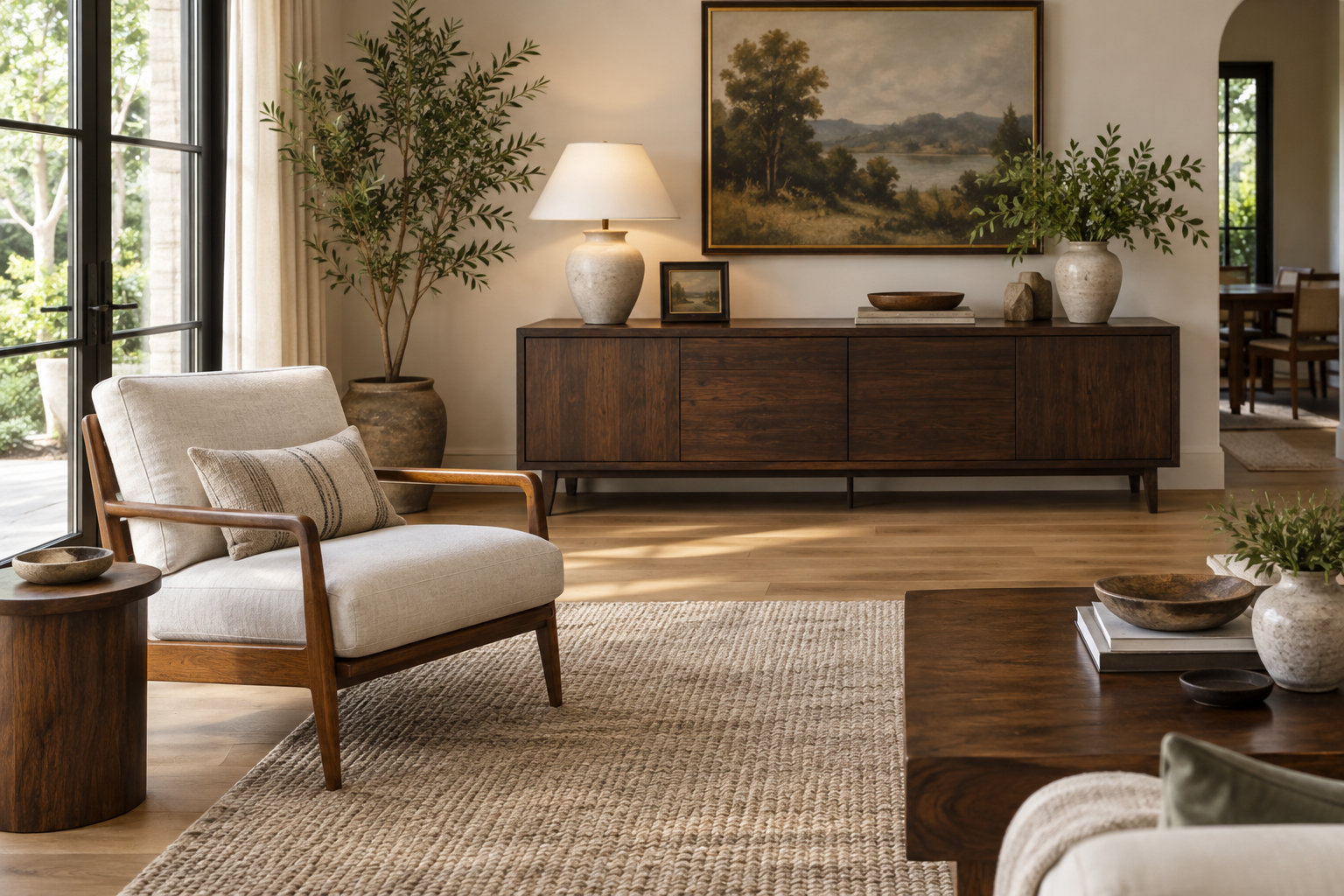
A pale wood floor, a dark sideboard, and a honey-colored inherited chair can make a room feel collected and personal. They can also feel disconnected when each finish seems to occupy its own corner. Before replacing anything, examine how the pieces relate to the room and to one another.
Mixing wood tones is a design choice, not a requirement to obey a universal formula. The following method uses the furniture you already own. It helps you identify what feels awkward, test small adjustments, and decide whether an additional piece would solve a real problem.
Separate darkness from undertone
A finish has a lightness or darkness that is easy to notice. It can also suggest an underlying color: yellow, orange, red, gray, or a more neutral brown. Designers often describe these color tendencies as undertones. Two equally dark pieces may therefore look quite different beside each other.
Look at each piece near a neutral surface in daylight, then check it under the lamps you actually use. Lighting can change the apparent relationship between colors. A photograph can help you compare placement, but a phone’s automatic adjustments may alter the colors you are trying to judge.
Do not assume that a wood species guarantees a particular appearance. Stain, finish, age, and the individual piece all affect what you see. For this exercise, the visible finish matters more than the name in a product description.
Identify the finish that sets the room’s context
Start with the largest or least movable wood surface. That may be the floor, built-in cabinetry, or a substantial dining table. Treat it as the background against which smaller pieces will be seen.
For example, a warm pale floor may occupy much more visual space than a dark cabinet. The cabinet can provide useful contrast rather than needing to imitate the floor. A medium-toned chair can sit between them, especially if its warmth relates to the floor or nearby textiles.
There is no mandatory number of finishes. A small room with several strongly patterned surfaces may benefit from fewer competing tones, while a larger space can accommodate more variety. Begin with what is already present and ask which piece seems isolated.
Repeat a color without buying a matching set
If one dark piece feels stranded, try moving an existing dark frame, tray, or lamp base into another part of the room. The repeated color can connect separate areas without requiring identical furniture. The echo might come from another material rather than another wood.
Keep the repetition modest. Adding several small objects solely to justify one cabinet may create more clutter than cohesion. Sometimes moving the cabinet closer to a darker doorway or placing artwork above it is enough to make its position feel deliberate.
Look at distribution from the entrance as well as from your usual seat. A room can appear balanced in a carefully framed photograph while feeling crowded from the place where you spend most of your time.
Give similar finishes some separation
Two wood finishes that almost match can draw attention to their difference when pressed directly together. Try creating a visible break. A rug can separate chair legs from the floor, while a runner, upholstered seat, or painted surface can interrupt a large area of adjoining wood.
The goal is not to conceal the furniture. It is to let each finish be seen clearly. Contrast can look more intentional than an unsuccessful attempt at sameness, particularly when the pieces have different grain patterns or levels of sheen.
Grain is the visible pattern in the wood. A strongly figured tabletop can act as a focal point, while quieter surfaces give the eye somewhere to rest. Consider texture and shine alongside color; a glossy red-brown cabinet may attract more attention than a larger matte piece.
Run a reversible room test
Choose one relationship to improve and change only that area. Move a rug, exchange two side tables, remove an accessory, or bring in a textile you already own. Live with the arrangement through both daylight and evening before judging it.
- Does the room still feel comfortable and easy to move through?
- Can you identify a reason the contrasting piece belongs there?
- Has the change reduced visual competition without making the room feel empty?
- Would buying something new add a useful function as well as a color connection?
Keep refinishing as a separate decision. A surface may be veneer, previously treated, or valuable in its existing condition. Establish what the material is and obtain suitable advice before sanding or applying a new finish simply to chase a closer match.
A room assembled over time does not need to erase that history. When the colors have a few points of connection, the contrasts have breathing room, and the layout works, different woods can remain visibly different while belonging comfortably in the same space.