
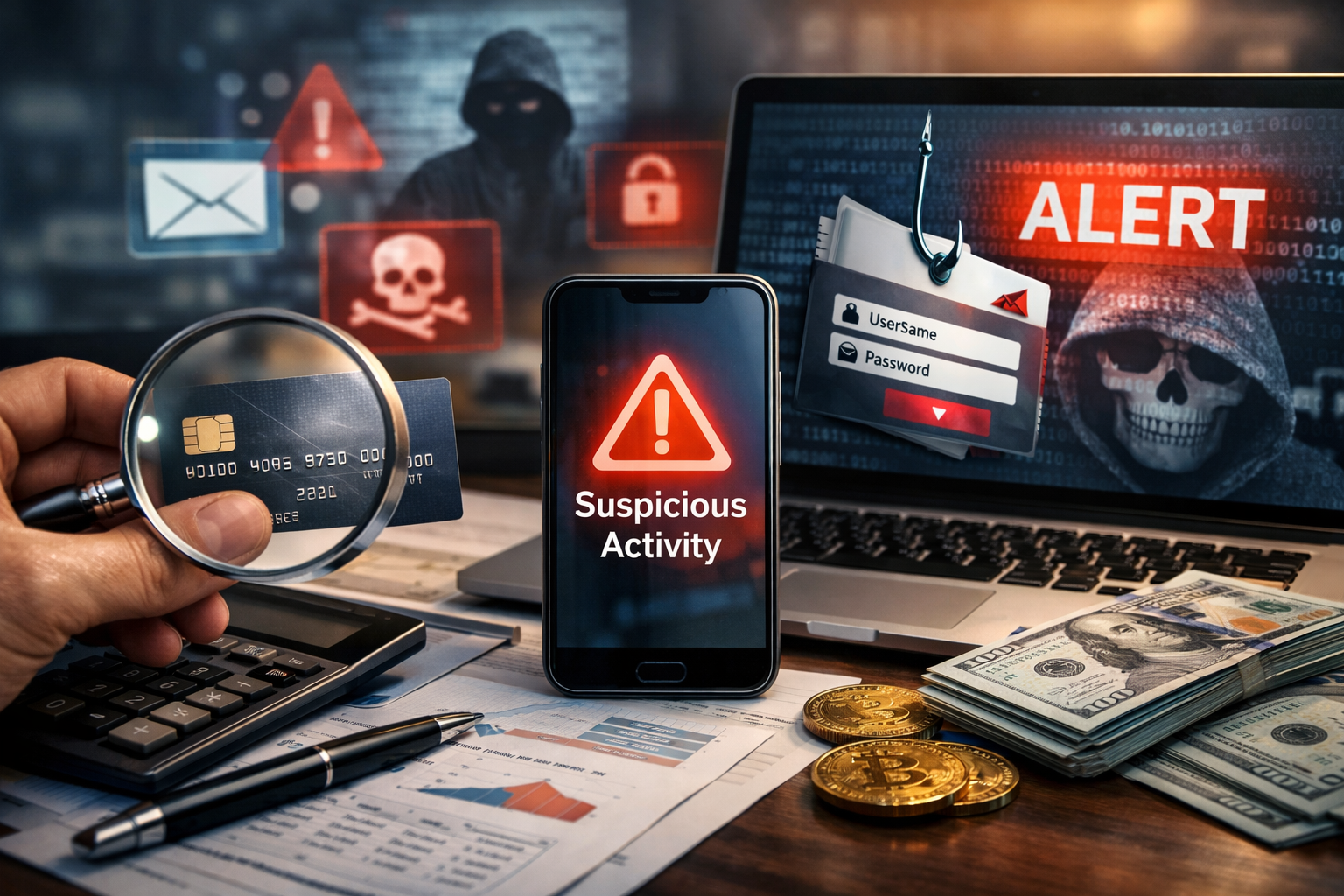
Scams & Fraud Prevention in Finance: How to Spot Threats Before They Cost You
Why Financial Scams Keep Growing
Scams and financial fraud have become more sophisticated as banking, investing, and payments move deeper into digital channels. Criminals no longer rely only on crude phishing emails. They now imitate banks, brokers, tax agencies, payment platforms, and even family members with alarming accuracy. In many cases, the goal is the same: create urgency, win trust, and persuade a victim to send money, reveal account credentials, or approve a transaction that cannot be reversed.
Finance and markets are especially attractive targets because they involve liquid assets, frequent transactions, and a constant flow of sensitive data. Retail investors may be lured into fake investment opportunities, while everyday consumers may be tricked into authorizing bank transfers, sharing one-time passcodes, or downloading malicious software. The combination of emotional pressure and technical deception makes fraud prevention an essential financial skill.
Common Types of Financial Scams
Phishing and Impersonation
Phishing remains one of the most common attack methods. Fraudsters send emails, text messages, or direct messages that appear to come from a trusted institution. These messages often claim there is unusual account activity, a payment problem, or a security alert that requires immediate action. Clicking the link may lead to a fake login page designed to steal usernames, passwords, and authentication codes.
Investment and Trading Scams
Scammers frequently exploit market excitement by promoting “guaranteed” returns, exclusive trading signals, or early access to a breakthrough asset. These schemes may involve fake cryptocurrency platforms, pump-and-dump operations, cloned brokerage websites, or unregistered investment products. If an offer promises low risk and unusually high returns, it deserves deep scrutiny.
Account Takeover Fraud
In account takeover fraud, criminals use stolen credentials to access bank, brokerage, or payment accounts. Once inside, they may change contact details, move funds, sell securities, or request new cards. Weak passwords, reused credentials, and compromised devices increase the risk.
Payment and Transfer Fraud
Authorized push payment scams occur when victims are manipulated into sending money themselves. A scammer may pose as a bank employee, seller, lawyer, or government official and instruct the victim to transfer funds to a so-called safe account. Because the payment is authorized by the customer, recovery can be difficult.
Red Flags You Should Never Ignore
While scams vary in style, many share a recognizable pattern. Paying attention to warning signs can stop fraud before it starts.
- Urgent demands to act immediately or keep the matter secret
- Requests for passwords, PINs, one-time codes, or remote device access
- Pressure to move money to a “safe” account
- Unsolicited investment offers promising guaranteed profits
- Messages containing suspicious links, attachments, or unusual sender addresses
- Requests to pay through gift cards, crypto transfers, or wire payments
- Poor grammar, inconsistent branding, or contact details that do not match official records
A simple rule helps: if a message triggers panic, urgency, or fear, pause before taking any action.
Practical Fraud Prevention Habits
Verify Through Official Channels
Never rely on the phone number, link, or contact details provided in a suspicious message. Instead, visit the institution’s official website manually or call the number printed on your bank card or account statement. Independent verification is one of the most effective anti-fraud habits.
Use Strong Authentication
Create unique passwords for financial accounts and store them in a reputable password manager. Enable multi-factor authentication wherever available. App-based authentication is often safer than SMS, although any second factor is usually better than password-only protection.
Monitor Accounts Frequently
Review bank, credit card, and brokerage activity regularly. Set transaction alerts for logins, transfers, password changes, and large purchases. Early detection can limit losses and improve the chance of reversing unauthorized activity.
Be Skeptical of Investment Hype
Before investing, verify that the firm, platform, or adviser is properly registered with the relevant regulator in your jurisdiction. Read independent reviews, examine the fee structure, and confirm custody arrangements. Avoid acting on social media tips or private messaging pitches without serious due diligence.
Protect Devices and Networks
Keep operating systems, browsers, and security software updated. Avoid logging into financial accounts on public Wi-Fi unless using a trusted secure connection. Download apps only from official stores, and review permissions carefully.
What to Do If You Suspect Fraud
Speed matters. If you believe your financial information has been compromised, take action immediately.
- Contact your bank, broker, or payment provider at once
- Freeze or lock affected cards and accounts if possible
- Change passwords and revoke suspicious device sessions
- Report the incident to the relevant fraud reporting agency or regulator
- Document messages, transaction details, and account activity
- Check your credit report and consider a fraud alert if identity theft is involved
Do not feel embarrassed. Fraudsters are skilled manipulators who refine their methods constantly. Fast reporting helps institutions contain damage and may also protect other potential victims.
The Role of Financial Institutions and Regulators
Banks, brokers, exchanges, and regulators play a crucial part in scam prevention. Many institutions now use behavioral analytics, transaction monitoring, device fingerprinting, and real-time alerts to identify suspicious activity. Regulators also issue warnings about unauthorized firms, fake websites, and emerging scam tactics. Still, no system can eliminate all risk. Consumers and investors remain the final line of defense, especially when a fraud attempt depends on social engineering rather than technical hacking.
Building a Fraud-Resistant Mindset
Fraud prevention is not about becoming fearful of every transaction. It is about building repeatable habits: slow down, verify independently, question extraordinary claims, and monitor accounts consistently. In finance and markets, discipline is not only important for investing and budgeting; it is also essential for personal security.
The safest approach is to assume that any unexpected request involving money, credentials, or urgent account action could be fraudulent until proven otherwise. That small pause can prevent a costly mistake and preserve both your savings and your confidence in the financial system.