Make a Cornstarch Slurry Before It Meets the Sauce
The sauce is nearly ready, but it is thinner than you want. Shaking dry cornstarch straight into the hot pan is tempting. It can also leave lumps that are difficult to stir out. Preparing a small slurry first gives the starch a better chance to spread through the liquid.
A slurry is a mixture of starch and cold liquid made before it enters the hot sauce. It is a preparation technique, not a complete sauce recipe. The amount of starch you need still depends on the recipe, the liquid, and the texture you want to serve.
Identify the ingredient before measuring
Use the fine white starch sold as cornstarch for thickening, checking the package description if regional names are unfamiliar. Cornmeal and other products made from ground corn are not interchangeable with it. Put the correct container beside your measuring spoon before you start cooking.
Follow a recipe’s measured quantity instead of judging from the size of a heap. A spoonful described as level is different from a rounded spoonful. Keep the starch measurement separate from the liquid used to mix it so you can understand what you actually added.
For example, a slurry containing one tablespoon of cornstarch and two tablespoons of water contains one tablespoon of starch, not three. That proportion appears in some sauce recipes, but it is not a universal instruction for every pan of sauce.
Mix in a separate small bowl
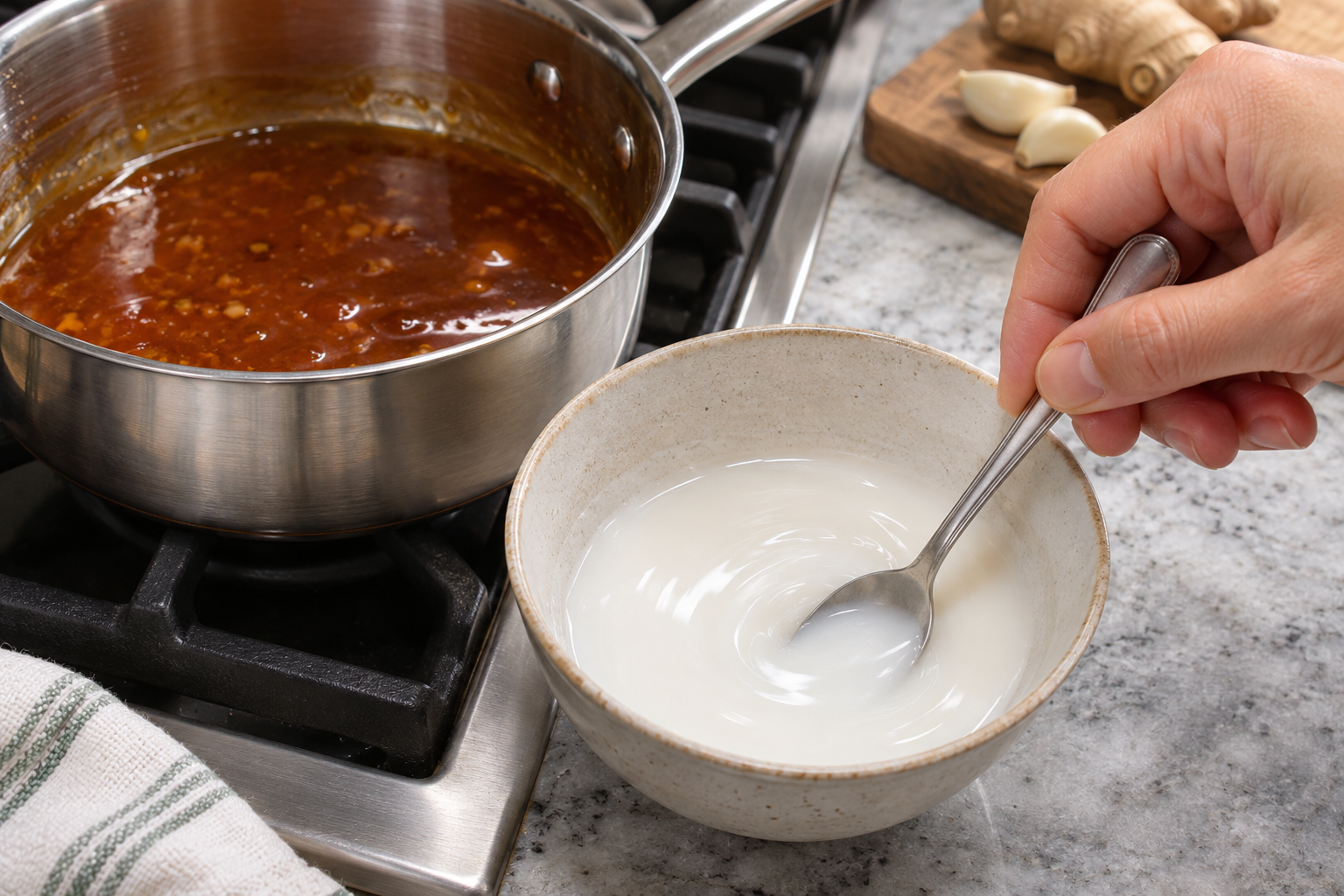
Add cold water or the recipe’s specified cold liquid to the measured starch and stir until the mixture is smooth. Scrape the bottom and corners of the bowl to check for dry pockets. The mixture should pour easily enough to distribute as you stir the sauce.
The cold mixing stage separates the starch particles before heat causes thickening. If dry powder meets hot liquid in a clump, its outside can thicken before the inside has dispersed. A smooth-looking surface in the mixing bowl is therefore not enough; check underneath it too.
Keep the bowl and spoon within reach of the pan. If the mixture has stood while you prepared other ingredients, stir it again immediately before use. Starch can settle, leaving a watery top and a concentrated layer at the bottom.
Add it while you can watch the sauce
Bring the sauce to the temperature specified by the recipe, then stir the slurry again and add it while stirring the sauce. Work steadily around the pan so the addition spreads. Avoid pouring everything into one still corner and trying to repair the distribution afterward.
Allow the mixture to cook as directed before deciding it needs more starch. Thickening requires heat; the appearance immediately after pouring is not the final result. Argo’s general instructions call for a brief full boil, while individual recipes may specify their own cooking sequence.
Continue gentle, attentive stirring during the thickening stage. Once the intended texture is reached, follow the recipe’s finishing directions. Prolonged boiling or vigorous stirring can reduce the thickening effect, so leaving the pan to cook indefinitely is not a reliable fix for thin sauce.
Judge the texture against its job
A sauce for lightly coating vegetables needs a different finish from a thick filling. Decide what the food must do on the plate. Does the sauce need to pour, cling, or hold a particular shape? A single description such as “nice and thick” gives you little guidance.
Check a small amount on a spoon or with a representative piece of the food, allowing it to cool enough to assess safely. Observe how it coats and moves. A sauce that looks loose while bubbling can seem different as it cools for serving.
If further thickening is needed after the proper cooking stage, make a small fresh slurry rather than adding dry powder. Add cautiously, keeping a note of the extra starch. If the sauce becomes too thick, small additions of an appropriate liquid may help, but they also change its flavor concentration.
Make the next attempt easier to repeat
Keep the recipe and your adjustments together. Record the starch amount, mixing liquid, approximate sauce quantity, and the texture at serving. “Added a little more” is hard to reproduce; a measured addition gives you something useful to compare next time.
For an especially acidic, sweet, or rich sauce, use a recipe designed for that mixture. Those ingredients can affect starch thickening, and repeatedly adding more powder may not solve the underlying issue. The slurry technique helps with dispersion; it does not make all recipes behave identically.
Wash the small mixing bowl when you finish and leave yourself one practical note about the result. A controlled sequence—measure, mix cold, stir again, add, cook, assess—turns thickening into an observable part of cooking rather than a last-minute guess.