Your First Aid Kit Has Supplies. Can You Find Them Quickly?
Your household has a first-aid kit, but the last time someone needed a dressing, you found loose plasters, an empty glove packet, and scissors buried under unrelated items. Owning the supplies was only part of being ready. Finding an appropriate item in usable condition mattered just as much.
A simple readiness review can make the kit easier to use. This guide concerns organizing supplies, not treating an injury. A kit supports appropriate first aid and medical help; it does not replace training or an emergency response when one is needed.
Choose a location people can actually describe
Keep the home kit somewhere the responsible adults can reach and identify quickly, while keeping medicines and other hazards out of young children’s reach. Follow the storage instructions on the items. A container that fits neatly into a cupboard is not useful if nobody remembers which cupboard it is in.
Use one clear description, such as “the labeled case on the hall cupboard shelf.” Tell other caregivers where it is. Children old enough to understand can learn its location and how to get an adult, without being encouraged to use unfamiliar supplies themselves.
A kit carried in a car or bag needs its own review. Heat, moisture, and rough handling can affect items differently, so check the manufacturer’s storage requirements rather than assuming anything suitable for an indoor shelf can remain in a vehicle indefinitely.
Empty the case and check the condition
Lay the contents on a clean surface and compare them with a reputable first-aid supply list appropriate to your household and activities. Useful basics commonly include suitable dressings, adhesive bandages, bandages, disposable nonlatex gloves, and first-aid instructions.
Check expiry dates where provided and inspect packaging. Replace expired items and supplies whose sterile packaging is torn, open, wet, or otherwise compromised. Do not assume an item is ready merely because it has never been used.
Look for hidden shortages. A packet can remain in the case after the last item has been removed. Count what is actually available, and check that reusable equipment is intact and maintained according to its instructions.
Group items without stripping away information
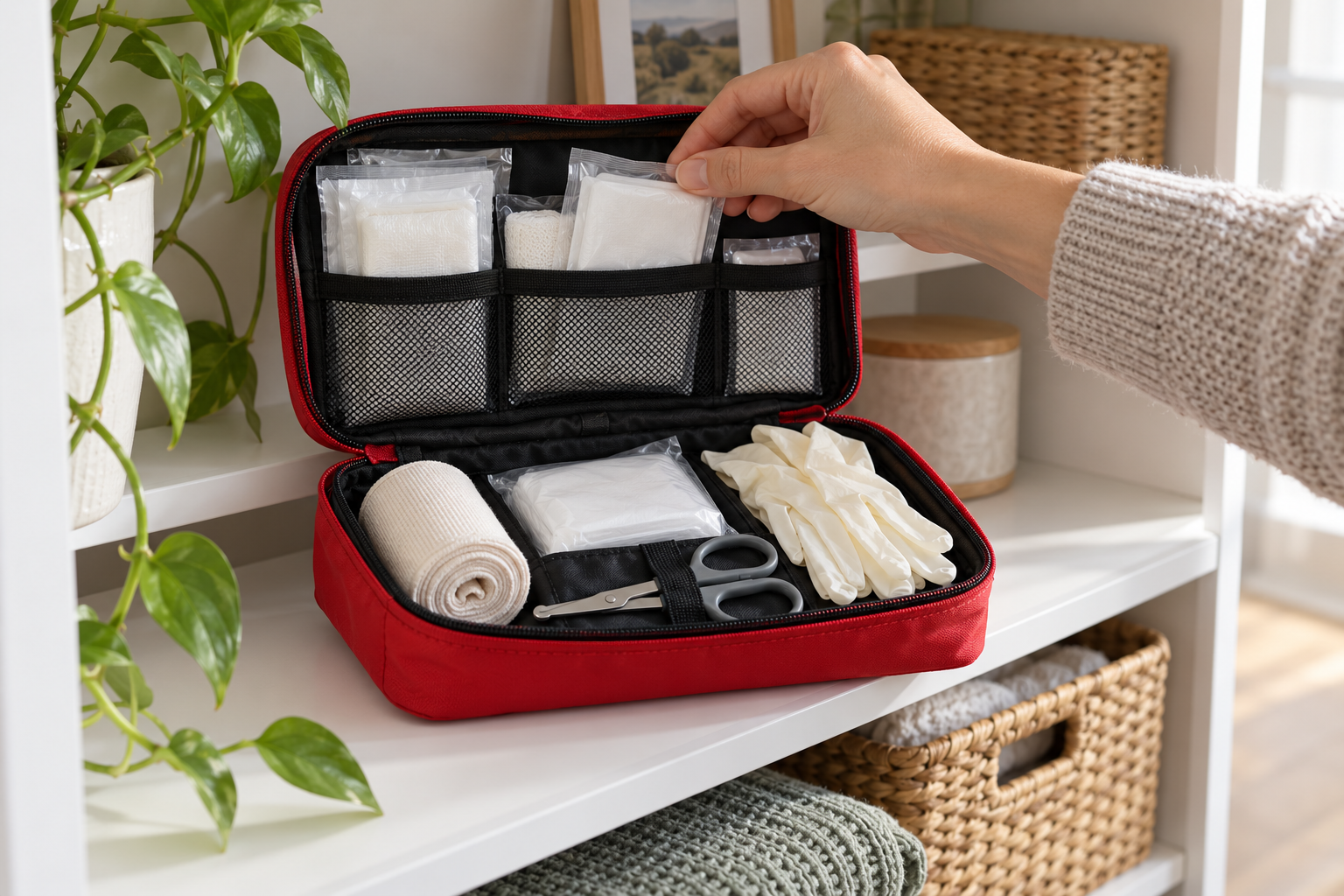
Use a few simple compartments that another person can understand. Dressings and bandages might share one section, gloves another, and small tools another. Avoid creating so many categories that someone has to learn a filing system before finding a basic item.
Keep sterile dressings in their individual packaging. Preserve product names, expiry dates, warnings, and instructions. A tidy collection of loose, unidentifiable items is less useful than clearly labeled original packs.
If an outer box is too bulky, make sure any information needed for safe identification and use remains with the items. Do not decant medicines into unmarked bags to make the kit look more uniform.
Keep medicines tied to the right person and instructions
Household needs differ. Ask a pharmacist or healthcare professional about appropriate medicines or personal supplies, especially where allergies, children, or existing conditions are involved. Buying a large premade kit does not establish that every included product suits everyone in the home.
Keep medicines in their original labeled packaging and follow their storage requirements. Prescribed emergency medication needs a clear, individual plan: who it is for, where it is kept, and who has been instructed in its use.
Do not move an essential personal item into the general kit simply to consolidate storage if that makes it less accessible to the person who needs it. Organization should support the agreed care plan.
Add a short contents and contact card
Place a simple inventory inside the lid or in an easy-to-see pocket. It can list the main sections, the date checked, and anything awaiting replacement. Keep the list brief enough that someone will maintain it.
Include the correct local emergency number and useful household contact information. If you include medical information for a household member, keep it current and consider who can access the kit. Use reliable, up-to-date first-aid instructions rather than a collection of unverified printed tips.
The card should help someone find information, not encourage them to spend time sorting the kit during a serious emergency. Calling for appropriate help takes priority over locating a particular product.
Test finding things without opening sterile packs
Ask another responsible adult to find the gloves, a dressing, and the instructions. Watch where they hesitate. Rename or rearrange compartments if the system makes sense only to the person who packed it.
After supplies are used, add replacements to the shopping list immediately and restock promptly. Set a recurring reminder to check the whole kit, and review it when household needs or activities change. Choose a routine you will actually follow.
Pair the organized kit with suitable first-aid training. Knowing where a dressing is and knowing when and how to use it are separate skills. Both deserve attention before a stressful moment makes them necessary.